
Retiring at 23 on Investment Income is a TikTok Myth, Not Reality
Translated & summarized from Maariv by baba
Author Ariel Feiglin debunks the idea that young people can retire at 23 solely through stock market investments, calling it a "TikTok lie." He calculates that even with a consistent 10% real annual return, earning an extra 5,000 shekels monthly requires a portfolio of around 840,000 shekels after taxes and inflation. Feiglin suggests that true financial independence through investments comes after decades of saving and accumulation, not through quick schemes.
The story in 6 lines · by baba
- Retiring at 23 solely on investment income is a "TikTok lie," according to author Ariel Feiglin.
- Achieving 5,000 shekels monthly requires a 600,000 shekel portfolio, rising to 840,000 with taxes and inflation.
- Consistent 10% real annual returns are unrealistic and unsustainable for young investors.
- Profiting from capital markets at a young age often involves earning commissions, not investment returns.
- Financial independence through investments typically requires decades of saving and accumulation.
- The article advises patience and warns against get-rich-quick schemes.
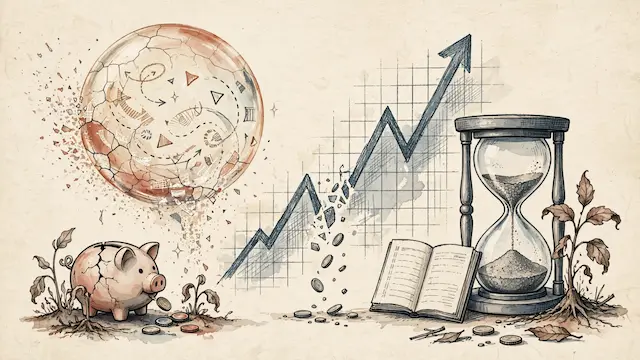
A popular notion, fueled by social media like TikTok, that young people can retire in their early twenties solely through stock market investments is a "TikTok lie," according to author Ariel Feiglin. While rumors circulate about individuals earning thousands of shekels monthly from the capital markets, a closer look at the numbers and common sense reveals this is largely unrealistic.
Even assuming an exceptionally high and consistent annual real return of 10% after inflation, a young person seeking an additional 5,000 shekels per month would need a substantial investment portfolio. To generate 60,000 shekels annually from a 10% return requires a 600,000 shekel portfolio. Factoring in taxes, fees, and inflation, this figure escalates to approximately 840,000 shekels. The article questions how many 23-year-olds possess such a sum in liquid investments, separate from down payments for housing or wedding gifts.
Feiglin suggests that the only way to "live off the capital markets" at a young age is by being on the side that earns commissions, such as working for an investment house or selling digital courses and referral links to open trading accounts. While some have profited from these methods, the sustainability is questionable as the market for convincing peers to open accounts may eventually become saturated, and market downturns could reduce interest.
The author clarifies that living off investments is achievable, but typically after decades of work, saving, and investment, when a significant asset base is accumulated. At that point, a modest withdrawal rate of 3-4% can sustain a lifestyle without relying on unrealistic returns or risking essential funds like rent money. The advice is to be patient, avoid shortcuts, and not fall for promises of quick wealth.
Keep up with
Mentioned