
Netanyahu and Bennett Stand to Gain Most if Unity Government Fails
Translated & summarized from Kipa by baba
Prime Minister Netanyahu and party leader Bennett are positioned to gain the most if efforts to form a unity government fail. Both leaders have publicly advocated for unity, but analysis suggests they have a political incentive for coalition talks to collapse. New elections could allow Netanyahu to consolidate his bloc, while Bennett could be seen as the only loyal politician if his partners falter, potentially absorbing their votes.
The story in 5 lines · by baba
- Netanyahu and Bennett may benefit most if a unity government fails to form.
- Both leaders have publicly called for a unity government.
- New elections could help Netanyahu consolidate his political bloc.
- Bennett could be seen as loyal if his partners fail, absorbing their votes.
- Izankot and Lieberman's coalition efforts could collapse, benefiting Bennett.
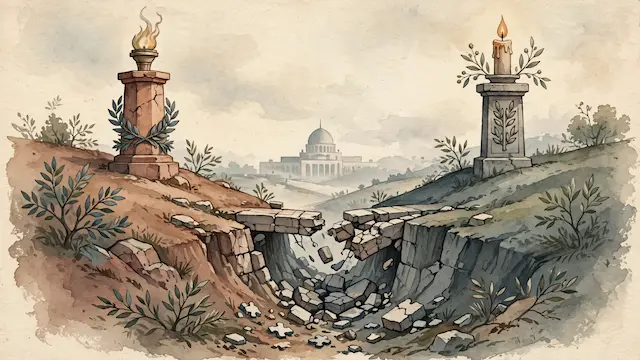
Despite calls for a unity government following the 26th Knesset elections, political maneuvering reveals that both Prime Minister Netanyahu and party leader Bennett may benefit most if such a coalition does not materialize. While other parties like Izankot and Yair Golan advocate for varying degrees of Arab support, and Lieberman reportedly favors aligning with the ultra-Orthodox, Bennett consistently promotes a unity government. However, an analysis suggests that both Bennett and Netanyahu share a vested political interest in the failure of current coalition talks.
Netanyahu's potential gain stems from a weakened bloc that failed to secure a majority. The ultra-Orthodox parties are unreliable, his career-long threats seem hollow, and "atmosphere" parties like those led by Hendel and Winter siphoned off votes. New elections could allow Netanyahu to consolidate his bloc, especially as the opposing coalition may struggle to replicate its previous strength, particularly after Izankot and Lieberman's willingness to cooperate with Arab parties was revealed.
Bennett's situation is more complex, influenced by his bloc partners who may have "burned their cards" too quickly. Izankot aims to replace Netanyahu, even briefly, to manage an election campaign from the Prime Minister's office. Lieberman has broken election promises, and if his sole objective of ousting Netanyahu fails, his voters may not forgive him. Bennett, in contrast, has maintained a low profile and adhered to his commitments.
If Izankot fails to form a government, Bennett could emerge as the primary beneficiary. While his bloc partners may have reneged on promises, Bennett could be seen as remaining loyal to his voters. This would position him to absorb votes from the collapsing campaigns of Izankot and Lieberman, potentially leading him to the 27th Knesset as a politician who kept his word. Ironically, the two leaders most vocal about the national necessity of a unity government, Netanyahu and Bennett, might profit the most from its collapse.
Keep up with
Mentioned




