Ultra-Orthodox Parties Face Historic Choice on Government Coalition
Translated & summarized from Channel 13 by baba
Ultra-Orthodox parties, particularly United Torah Judaism, face a historic decision on joining a new government coalition, balancing their community's severe economic and legal distress against the potential loss of the long-held status quo on religion and state. After years of unfulfilled promises and recent legislative hardships, the parties are negotiating from a weak position. Their ability to influence future government decisions on religious matters is uncertain, relying on assurances from potential coalition partners like Gadi Eisenkot. Rabbis Dov Lando and Moshe Hillel Hirsch must decide whether to risk losing decades of influence for immediate relief.
The story in 5 lines · by baba
- Ultra-Orthodox parties face a historic choice on joining a new government, risking the status quo for immediate relief.
- The ultra-Orthodox community faces its worst legal and economic situation since the state's founding.
- United Torah Judaism seeks a lifeline after unfulfilled promises and recent adverse legislation.
- The potential new government could disregard religious status quo agreements without ultra-Orthodox support.
- Gadi Eisenkot must convince ultra-Orthodox leaders that supporting the coalition is worthwhile.
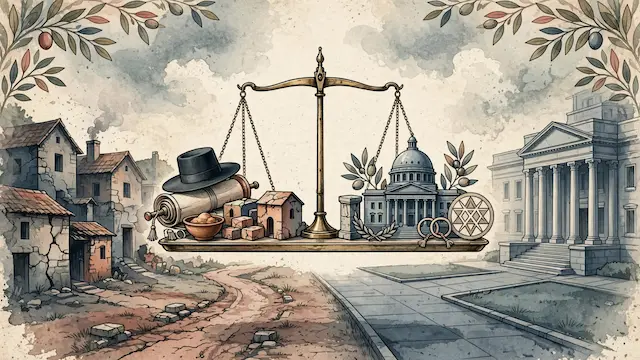
Ultra-Orthodox parties are entering coalition negotiations with the "Change Bloc" in a precarious position, facing difficult choices regarding their future political standing. The article suggests a lack of good faith in negotiations, with parties that previously accused the ultra-Orthodox sector of responsibility for fallen soldiers now seeking to form a government with them. The primary interest for the ultra-Orthodox parties, particularly United Torah Judaism, is to secure a lifeline after numerous unfulfilled promises from Benjamin Netanyahu, budget cuts, and legislation that has legally criminalized members of their community.
The ultra-Orthodox public is currently experiencing its worst legal and economic situation since the establishment of the state. This dire starting point presents the leadership with a significant dilemma: not just what they will gain in the next government, but what they risk losing, the status quo on religion and state matters. For decades, this status quo, encompassing issues like Shabbat observance, kashrut, conversion, and marriage, has been considered sacrosanct by United Torah Judaism. Even in past governments where they didn't achieve all their goals, they held significant influence and the power to topple governments.
In the current situation, however, the ultra-Orthodox parties are being asked to pay upfront by enabling the formation of a new government, potentially signing onto it, while receiving legislative and financial benefits on credit. Unlike previous governments, they would not be the dominant force. A government with a narrow 67-seat majority, even without ultra-Orthodox support, could theoretically disregard agreements on religion and state issues, leaving the ultra-Orthodox with no ability to prevent it. Their only assurances rely on the word of figures like Avigdor Lieberman, who has previously made disparaging remarks about the sector, and Gadi Eisenkot, who is seen as honest but lacks extensive political experience.
The leadership faces a critical decision: to risk losing decades of influence in exchange for attempting to alleviate the current distress of their community, or to preserve the established status quo. The burden of proof now lies with Gadi Eisenkot to convince the ultra-Orthodox leadership that the potential gains are sufficient to warrant this historic decision and their support. Rabbis Dov Lando and Moshe Hillel Hirsch of Degel HaTorah are expected to make this crucial choice next week.
Keep up with
Mentioned