
Ultra-Orthodox Protest Near Ben Gurion Airport Disrupts Traffic
Translated & summarized from Al-Shams by baba
Ultra-Orthodox protesters blocked the rear entrance to Ben Gurion International Airport on Thursday evening, causing traffic disruptions. The protest is part of ongoing demonstrations against mandatory military conscription and the arrest of draft evaders. The issue of military service exemptions for yeshiva students remains a significant political and legal dispute in Israel, leading to frequent public unrest and police intervention.
The story in 6 lines · by baba
- Ultra-Orthodox protesters blocked the rear entrance to Ben Gurion Airport on Thursday, disrupting traffic.
- The protest is linked to ongoing demonstrations against mandatory military conscription for the ultra-Orthodox community.
- Recent arrests of draft-evading yeshiva students have fueled a new wave of protests across Israel.
- The core issue is the ultra-Orthodox demand for continued exemptions from military service.
- The controversy has intensified following the expiration of legal deferral arrangements for yeshiva students.
- Police intervened to reopen roads and disperse demonstrators during various recent protests.
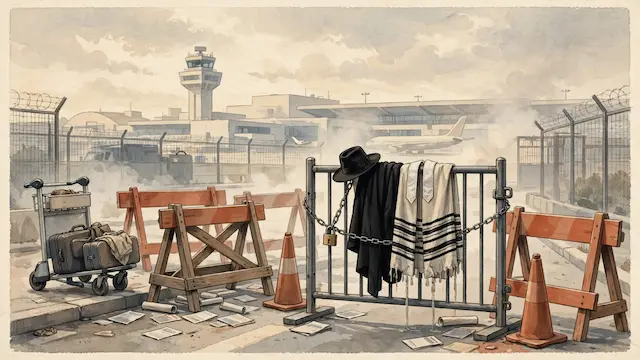
An unexpected protest by ultra-Orthodox demonstrators near Ben Gurion International Airport on Thursday evening led to the closure of the airport's rear entrance, causing significant traffic disruptions. Israeli police were dispatched to the scene to reopen the road. The protest caused confusion for vehicles heading to the airport. Details regarding the specific demands of the protesters were not immediately available. This action occurs amidst ongoing demonstrations by some ultra-Orthodox factions against mandatory military conscription and the arrest of individuals evading service.
These protests have escalated recently, with ultra-Orthodox groups expressing strong opposition to the conscription of yeshiva students and the subsequent arrests of those refusing military service. The core of the dispute lies in the ultra-Orthodox community's insistence on exemptions from military service for yeshiva students, a contentious political and legal issue within Israel. The demonstrations coincide with increased military actions against draft evaders and ongoing debates about the application of military service laws to the ultra-Orthodox community and the equitable distribution of service burdens.
Recent arrests of ultra-Orthodox men for draft evasion have ignited a new wave of protests in various locations, including Jerusalem and Bnei Brak. On November 19, protests erupted in Jerusalem and Bnei Brak following the arrest of a yeshiva student, leading to road closures and confrontations with police. Traffic was also disrupted on Highway 4 and other areas. Israeli media reported these protests as a rejection of the arrests of draft evaders, with police intervening to disperse demonstrators and clear blocked roads. Similar protests occurred in Jerusalem on Thursday, where demonstrators attempted to block roads at the Sanhedria junction before police intervened.
The issue of ultra-Orthodox conscription remains a prominent point of contention in Israel, with growing calls for mandatory service for yeshiva students clashing with widespread ultra-Orthodox opposition to ending their traditional exemptions. The controversy has intensified following the expiration of legal arrangements that allowed for service deferrals for yeshiva students, bringing them back under the purview of military service laws and increasing enforcement actions against those who do not comply. This has led to political and judicial pressure on the Israeli government to find a solution, amid disagreements over the scope of exemptions and penalties for draft refusers. Protests are frequent, often leading to road closures and traffic disruptions that require police intervention.
Keep up with
Mentioned
The same event, reported separately by each outlet. Open a few to compare what different newsrooms emphasize — and what they leave out.
Left 1Centre 2Haredi 1Arab 3Other 3










Not the same event — other stories that share this one’s people, places, or theme: background, reactions, and follow-ups.


