
Israel Turned Hostage-Taking Into Hamas's Strategic Asset, Study Finds
Translated & summarized from Arutz Sheva by baba
A study by Tzur Goldin, brother of fallen soldier Hadar Goldin, criticizes Israel's past hostage policies, arguing they enabled Hamas to leverage kidnappings. The research, based on interviews and document analysis, suggests that Israel's fear of high costs and its Gaza reconstruction policies inadvertently strengthened Hamas. Goldin proposes a new strategy involving sustained economic, diplomatic, and military pressure to make hostage-taking a burden for abductors, rather than an asset. The study also highlights the importance of hostage families' advocacy and calls for a dedicated inter-organizational body to manage hostage crises.
The story in 6 lines · by baba
- Tzur Goldin's study criticizes Israel's pre-Oct 7 hostage policies, arguing they made kidnappings a strategic asset for Hamas.
- The study highlights that Israel's Gaza reconstruction and prisoner release policies did not secure the return of four key hostages.
- Goldin proposes a new strategy involving sustained economic, diplomatic, and military pressure to counter hostage-taking.
- He recommends establishing a permanent, professional inter-organizational body to manage hostage crises.
- The research emphasizes the importance of hostage families' advocacy in influencing negotiations and public discourse.
- The study contrasts past approaches with the current situation, where hostage return remains a condition for a deal.
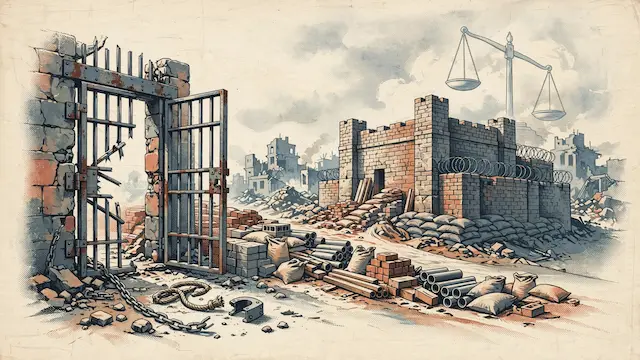
A comprehensive study by Tzur Goldin, brother of fallen soldier Hadar Goldin, analyzes Israel's pre-October 7th hostage policies and proposes future strategies to combat kidnapping. Goldin, whose brother was killed and taken captive by Hamas during Operation Protective Edge, argues that Israel's handling of the cases of four hostages, Hadar Goldin, Oron Shaul, Avera Mengistu, and Hisham al-Sayed, contributed to the unprecedented hostage crisis following the October 7th attack. He contends that the fear of paying high prices, stemming from the Shalit deal trauma, led decision-makers to focus on minimizing the number of terrorists released rather than pressuring Hamas.
For nine years prior to October 7th, Israel pursued a policy of rebuilding and developing the Gaza Strip, allowing at least $20 billion in external funding into the enclave. This included expanded work permits for Gazans in Israel, infrastructure projects, and Qatari financial transfers, none of which were conditioned on the return of hostages. The study highlights that at least 677 convicted security prisoners were released in other proceedings before October 7th, without advancing the return of the four hostages. Goldin notes that Israel avoided releasing prisoners for hostages but also failed to leverage its prisoner pool as a bargaining chip.
In August 2018, the heads of the IDF, Shin Bet, and Mossad jointly recommended conditioning Qatari funding and reconstruction efforts on the return of hostages. This recommendation was rejected by the Prime Minister, and Qatari funding continued. Nineteen rounds of airstrikes and three major operations in Gaza also concluded without making hostage return a condition for ceasefires. Goldin states that time and patience worked against Israel's policy, as Hamas integrated hostage-taking into its public discourse, culture, and education, presenting it as a successful strategic method.
During the current Swords of Iron War, Goldin observes that military pressure, intelligence efforts, and American diplomatic pressure were key to advancing hostage deals. However, when military gains became non-negotiable conditions, agreement space narrowed, delaying hostage returns. The study indicates that 168 hostages returned alive and 87 as deceased. Approximately 95% of living hostages were released through agreements or unilateral releases, while nearly 60% of deceased hostages were recovered via rescue operations. Agreements involved the release of 4,094 detainees and security prisoners, including 450 serving life sentences.
Goldin also emphasizes the crucial role of hostage families' advocacy, particularly their engagement with the US administration. He believes their efforts signaled to Hamas that continued hostage detention would prolong the war, while their release could pave the way for its end. He criticizes partial deals and the categorization of hostages, which allowed Hamas to exert psychological terror by creating different 'price tags' for different hostage categories. Goldin contrasts the end of Operation Protective Edge in 2014, where Israel relinquished its main leverage, the end of the war, without securing hostages, with the current situation where the completion of a deal remains contingent on their return.
Goldin recommends establishing a permanent, professional, inter-organizational security body with the authority and resources to manage the fight against hostage-taking in routine and emergency times, minimizing political influence. He proposes a third track for hostage recovery, in addition to military rescue and deals, involving sustained economic, diplomatic, military, legal, and cognitive warfare against the abducting organization and its supporters, even during negotiation stalemates. He stresses the state's duty to hostage families, stating that diminishing the value of return or portraying families as obstacles serves the abductor by deepening their isolation and pressure.
Keep up with
Mentioned
The same event, reported separately by each outlet. Open a few to compare what different newsrooms emphasize — and what they leave out.
Coverage from Arutz Sheva
