
Sakhnin Faces Resurgent Crime After Temporary Calm, Expert Says
Translated & summarized from Al-Shams by baba
Professor Sami Miari stated that Sakhnin is facing a resurgence of crime, including extortion and arson, after a temporary calm. He argued that economic factors are not the primary drivers of this violence, suggesting social changes and weak family structures are more significant. Miari criticized the police for negligence and called for organized community efforts and municipal action to combat the ongoing crisis.
The story in 5 lines · by baba
- Sakhnin is experiencing a rise in crime including extortion and arson, prompting some families to leave.
- Professor Sami Miari stated that economic factors alone do not explain the crime surge in Arab communities.
- Miari criticized police negligence in addressing crime in Arab towns and called for organized efforts.
- He suggested social transformations and weakened family structures may contribute to the violence.
- Miari called for stronger municipal action and community-wide planning to combat crime.
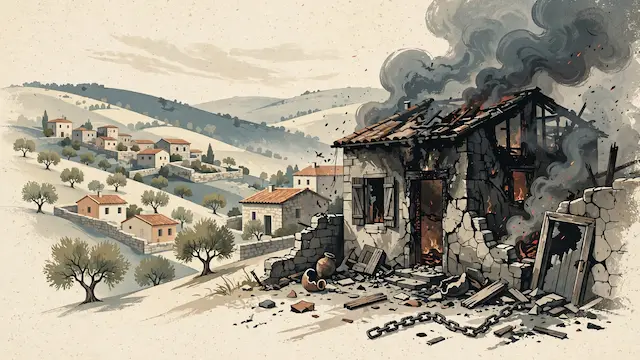
Sakhnin is experiencing a continuous deterioration of its situation, marked by rising crime including extortion, theft, and arson, according to Professor Sami Miari, a researcher and lecturer in economics. This surge in criminal activity is causing significant concern among residents, prompting some middle and upper-class families to leave the city. Miari noted that while popular movements in Sakhnin had achieved a temporary period of relative calm about a year ago, they failed to address the root causes of the violence, which he described as a broader crisis within Arab society.
Miari emphasized that economic factors alone do not explain the spread of crime, pointing out that the Arab community has seen economic improvements and increased educational attainment in recent years, yet crime persists. His research indicates no statistically significant link between employment rates or individual income and involvement in crime. Instead, he suggested that rapid social transformations, the weakening of traditional social structures, diminished family control, and social comparison may play a role.
The professor holds the police primarily responsible for confronting crime, stating they possess the necessary means but have been negligent in addressing the situation in Arab towns. He criticized reliance on individual family initiatives, like those seen during the previous Sakhnin movement, arguing they only provide temporary lulls rather than eradicating the problem.
Miari called for organized, professional efforts involving all families and community members in Sakhnin. He advocated for strengthening the local authority's role, activating neighborhood committees, and investing in security and community projects such as surveillance cameras, stressing the need for planning and follow-up over spontaneous actions. He also criticized the municipality's perceived lack of tangible action, stating that meetings are insufficient without clear plans and results.
Concluding his remarks, Miari expressed hope that political changes might lead to more effective action against crime. He stressed the importance of pressuring the government and security agencies and unifying community and political efforts to restore security to Sakhnin and other Arab towns.
Keep up with
Mentioned