
Israeli Lawmakers Reject Bill to Halt Draft Evasion Arrests for Haredim
Translated & summarized from Vesty by baba
Knesset members from the National Unity party voted against a bill to suspend arrests of yeshiva students evading military service. The bill, proposed by MK Meir Porush of Yahadut HaTorah, failed on November 25. This occurred after meetings between Yahadut HaTorah and Prime Minister Netanyahu, and discussions between Gadi Eisenkot and Avigdor Lieberman regarding yeshiva student status. Yahadut HaTorah insists on draft deferment for yeshiva students as a condition for supporting a new government.
The story in 6 lines · by baba
- National Unity party lawmakers voted against a bill to halt arrests of yeshiva students evading military service.
- The bill, proposed by MK Meir Porush of Yahadut HaTorah, was rejected on November 25.
- Yahadut HaTorah insists on draft deferment for all yeshiva students as a non-negotiable condition.
- Transportation Minister Miri Regev commented on trust issues with Ashkenazi politicians.
- Shas party criticized the National Unity bloc for failing to pass the law.
- Yahadut HaTorah hopes to bring Shas into cooperation with the National Unity bloc.
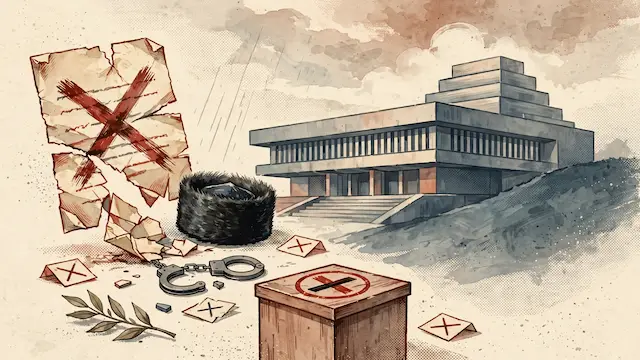
Knesset members from the National Unity party voted on Wednesday, November 25, against a bill that would have suspended arrests of yeshiva students evading military conscription until a new government is sworn in. The bill, proposed by MK Meir Porush of Yahadut HaTorah, was defeated.
The vote followed a meeting between Yahadut HaTorah Chairman Yaakov Asher and Prime Minister Benjamin Netanyahu. Asher and his party were reportedly considering supporting a government being formed by Gadi Eisenkot, head of the National Unity party. The chances of Yahadut HaTorah supporting Eisenkot's bloc increased after agreements between Asher and Avigdor Lieberman, chairman of Yisrael Beiteinu, regarding the status of yeshiva students.
Earlier on November 25, Lieberman stated on Kan Reshet Bet radio that a government with a clear Jewish majority could be presented by the end of the following week. Transportation Minister Miri Regev (Likud) commented to Asher in the Knesset corridors, alluding to his contacts with the National Unity bloc, "You cannot trust Ashkenazim. I know what I'm saying, I am married to a Polish Jew."
Following the vote, the Shas party's parliamentary faction released a statement criticizing Gadi Eisenkot, Avigdor Lieberman, and their allies for failing to pass the law that would have halted arrests. MK Meir Porush stated that promises to resolve the status of yeshiva students should not be made while deepening national division, emphasizing that Yahadut HaTorah insists on a resolution as a non-negotiable condition.
Porush is expected to address his faction, explaining that after the bill's failure, party leaders Yaakov Asher and Yitzhak Goldknopf have no reason to engage with the National Unity bloc. Yahadut HaTorah's primary demand is to reinstate the status quo that existed before the expiration of the "Torato Umanuto" law, ensuring draft deferment for all registered yeshiva students until the end of draft age. The party also seeks to maintain state funding for its private schools without curriculum interference and preserve the status quo on religion and state matters.
Netanyahu had invited Asher for discussions to ascertain the status of Yahadut HaTorah's contacts with the National Unity bloc. The ultra-Orthodox camp is reportedly concerned about the possibility of Eisenkot receiving support from Arab parties, which could diminish the influence of Yahadut HaTorah and Shas. In such a scenario, an alliance with the National Unity bloc is seen as risky, as broken promises to the ultra-Orthodox might not yield leverage if the government has a "safety net" of 19 Arab mandates.
Despite the vote's outcome, Yahadut HaTorah has not abandoned contacts with the National Unity bloc and hopes to bring Shas into cooperation. A source in Yahadut HaTorah indicated that if Shas is allocated desired ministries like Interior, Health, and Religious Services, its representatives would join negotiations.
Keep up with
Mentioned
The same event, reported separately by each outlet. Open a few to compare what different newsrooms emphasize — and what they leave out.
Centre 1Other 1

Not the same event — other stories that share this one’s people, places, or theme: background, reactions, and follow-ups.


