
IDF Faces Critical Shortage of Combat Vehicles Ahead of Potential War
Translated & summarized from Cursorinfo by baba
The IDF faces a critical shortage of combat-ready armored vehicles, with only 70% operational, according to a Ynet report. Despite repairing about 900 damaged vehicles and over 9,600 bulldozers, continuous use has led to a readiness deficit. The IDF aims to restore full combat readiness by 2027, addressing equipment, spare parts, and infrastructure needs amid multiple operational fronts.
The story in 5 lines · by baba
- IDF combat readiness for armored vehicles stands at only 70%, risking a deficit in potential large-scale hostilities.
- Approximately 900 damaged armored vehicles have been repaired and returned to service by the IDF.
- Over 9,600 bulldozers were repaired, and tens of thousands of protective equipment units restored or replaced.
- The IDF aims to achieve full combat readiness by 2027, requiring extensive restoration and infrastructure rebuilding.
- Technical units now operate directly on front lines, repairing equipment under fire in combat zones.
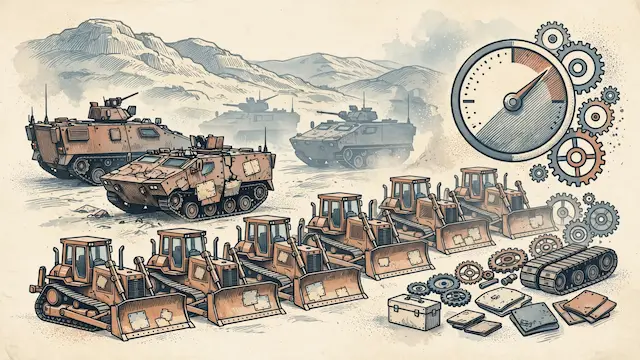
The Israel Defense Forces (IDF) is facing a significant deficit in its armored vehicle fleet, with current combat readiness estimated at only 70%, according to a report by Ynet on Tuesday, November 24. This situation poses a risk of units being without essential weaponry should large-scale hostilities resume. Over the course of the war, the IDF's Technology and Logistics Directorate has managed to restore and return approximately 900 damaged armored vehicles to service, a number comparable to the equipment of nine armored brigades. Additionally, over 9,600 bulldozers were repaired, and tens of thousands of protective equipment units were restored or replaced. Despite these efforts, the continuous use of many vehicles on the front lines prevented timely major repairs and maintenance, leading to the current readiness level.
The nature of combat has also changed the role of technical units. Previously considered auxiliary forces stationed in the rear, they now operate on front lines, often under fire in areas like Gaza, the West Bank, and Lebanon. This requires immediate repairs in combat zones, a stark contrast to the previous need for stationary, in-depth overhauls. The IDF aims to make 2027 a year of restoring combat readiness, which includes not only repairing existing equipment but also replenishing spare parts, restoring equipment, and rebuilding repair infrastructure, especially in light of potential renewed conflict with Iran.
The report highlights that the IDF has returned 82% of damaged equipment to operational status. Specialists replaced, repaired, manufactured, or acquired over 17,000 components and assemblies. Furthermore, more than 16,000 units of protective equipment were produced, purchased, and installed, alongside tens of millions of spare parts. The IDF is now tasked with maintaining readiness on multiple fronts, necessitating a comprehensive restoration program beyond immediate field repairs.
Keep up with
Mentioned
The same event, reported separately by each outlet. Open a few to compare what different newsrooms emphasize — and what they leave out.
Centre 1Other 1

Not the same event — other stories that share this one’s people, places, or theme: background, reactions, and follow-ups.


