UN Climate Summit Collapses Amidst Oil Producer Pressure
Translated & summarized from Calcalist by baba
The UN Climate Summit (COP31) in Turkey failed to reach an agreement for the first time since 2009, collapsing due to pressure from oil-producing nations. Key provisions to phase out fossil fuels were removed from the draft, leading the EU and other nations to reject the final text. The summit's outcome raises concerns about global warming projections and economic impacts, despite a positive trend in clean energy investment worldwide. Israel did not attend the conference, citing security reasons.
The story in 6 lines · by baba
- UN Climate Summit in Turkey failed to reach an agreement due to oil producer pressure.
- References to fossil fuels, oil, and coal were removed from the final draft agreement.
- The EU and other nations rejected the final text, deeming it an "empty resolution."
- Global warming is projected to reach 2.6-2.8 degrees Celsius by 2100 based on current policies.
- Natural disasters caused $220 billion in economic damage in 2025, with heat linked to 710,000 deaths annually.
- Israel did not participate in the summit, citing security concerns.
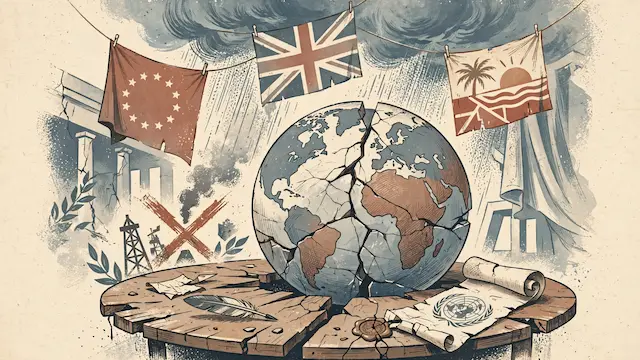
The UN Climate Summit (COP31) in Turkey concluded without an agreement, marking the first such failure since 2009. The collapse followed unprecedented intervention by oil-producing nations, leading to a final draft unacceptable to the European Union and other countries. The next conference is scheduled for Ethiopia in one year.
Initially, the draft called for accelerating the transition away from fossil fuels, identified as the primary driver of global warming. However, within three days, under pressure from Saudi Arabia, Russia, and other oil producers, all references to "fossil fuels," "oil," or "coal" were removed. Irish Minister Dara O'Brien, speaking for the EU, stated, "We will not approve an empty resolution, or an 'Antalya Agreement' that does not even mention fossil fuels." The EU was joined by the UK, Panama, the Marshall Islands, and Switzerland in its stance. Australian Minister Chris Bowen, who presided over the talks, acknowledged "unbridgeable red lines."
The failure has significant implications, with scientific consensus linking fossil fuel combustion to climate change. Despite this, nearly 200 nations reportedly succumbed to oil industry lobbying. The World Meteorological Organization reported that the period from January to September 2026 was 1.47 degrees Celsius warmer than pre-industrial levels. The years 2015-2026 represent the twelve warmest on record, with the intensifying El Niño phenomenon expected to peak in December. Current national commitments, according to UN estimates, point to a warming of 2.6 to 2.8 degrees Celsius by the end of the century.
Economic and health impacts are substantial. A Lancet Countdown report indicated that heat is linked to approximately 710,000 deaths annually. In 2025, natural disasters caused $220 billion in economic damage, with insured losses exceeding $100 billion for the sixth consecutive year, primarily due to fires, storms, and floods. Productivity losses from heat cost the global economy over $1 trillion in 2025. Projections suggest that a 3-degree Celsius warming could more than triple heat-related deaths in Europe annually by century's end, and reduce global food production capacity by 4.4% per person daily, leading to an estimated 8% drop in global crop yields by 2050. Economic damage from a 3-degree warming is estimated at a tenth of global GDP by mid-century.
Instead of phasing out fossil fuels, the summit agreed on a target to capture and store one billion tons of carbon by 2035, a technology criticized by some as expensive and ineffective. The Paris Agreement's goal of limiting warming to 1.5 degrees Celsius was effectively raised to approximately 2.8 degrees by 2100 based on current policies. Furthermore, the gap in adaptation finance remains vast, with developing nations needing an estimated $305 billion annually but receiving only $28-32 billion in 2024. Even a threefold increase by 2035, as decided at the previous conference, would only cover 20-29% of the need.
On a positive note, over 80 countries supported Turkey's goal to increase electricity's share in global energy consumption to 35% by 2035. Global investment in clean energy is outpacing fossil fuels, with $2.2 trillion allocated to clean energy out of a total $3.4 trillion in energy investments this year, marking the first time clean energy receives nearly double the investment. Israel did not participate in the summit, citing security concerns, and sent no delegation.
Keep up with
Mentioned