
Kushner Warns Israel Faces Isolation Over Gaza Reconstruction Blockade
Translated & summarized from Arab48 by baba
Jared Kushner warned that Israeli policies could lead to international isolation, criticizing Prime Minister Benjamin Netanyahu for blocking Gaza's reconstruction. Kushner revealed that Netanyahu doubted U.S. mediation efforts and that he personally pushed for the reconstruction plan. He also discussed direct negotiations with Hamas and U.S. dealings with Iran, suggesting Netanyahu influenced a harder U.S. stance against Tehran.
The story in 6 lines · by baba
- Jared Kushner warned Israel risks international isolation due to its current policies and Netanyahu's blockade of Gaza reconstruction.
- Prime Minister Netanyahu reportedly doubted U.S. mediation efforts to end the war and secure hostage releases.
- Kushner revealed direct negotiations with Hamas representatives in Sharm El Sheikh, despite Israeli opposition.
- Josh Greenbaum criticized Netanyahu's government for the stalemate and urged adherence to Trump's commitments.
- Kushner participated in U.S. negotiations with Iran, believing their proposal allowed for nuclear weapon advancement.
- Netanyahu reportedly influenced the U.S. to adopt a tougher stance against Iran, including calls for regime change.
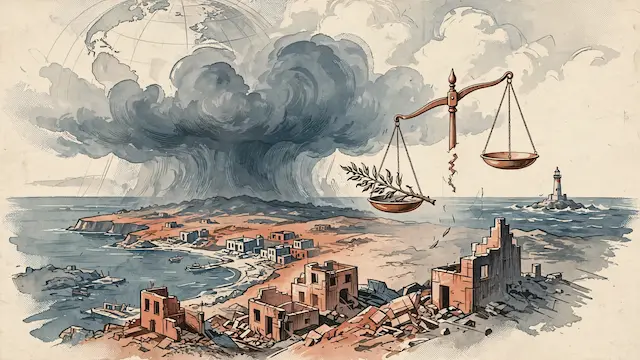
Jared Kushner, former advisor to U.S. President Donald Trump, has warned that Israel's current policies could lead to its international isolation. He stated that Prime Minister Benjamin Netanyahu is obstructing the reconstruction plan for the Gaza Strip, despite an agreement on a ceasefire and the return of Israeli captives. Kushner told New York magazine that Israel is at a crossroads, with the potential to emerge from the October 7th tragedy more secure and integrated globally, or to continue on a path toward becoming a pariah state.
Kushner revealed that Netanyahu doubted the U.S. mediation's ability to end the war and secure the release of hostages, saying, "Bibi didn't think we could do it." He also detailed his efforts over recent months to persuade Netanyahu to allow the reconstruction plan to proceed, but faced refusal, leaving the process stalled.
These statements align with criticism from Josh Greenbaum, a senior advisor at the Peace Council, who blamed political factors within Netanyahu's government for the current stalemate. Greenbaum urged Israel to honor its commitments to Trump and warned that cooperation opportunities might diminish after the U.S. midterm elections and a shift in Washington's political climate. He also cautioned of an approaching "catastrophic winter" in Gaza, emphasizing Israel's responsibility as the controlling power to prevent a worsening humanitarian crisis, and stressed that the U.S. plan relies on verified commitments, not trust in Hamas.
Kushner also discussed his and U.S. envoy Steve Witkoff's decision to engage in direct negotiations with Hamas representatives in Sharm El Sheikh, despite Israeli opposition, during efforts that led to the war and hostage agreement. Witkoff reportedly established personal contact with a Hamas representative whose sons were killed in Israeli attacks, drawing from his own experience of losing a son. Khalil al-Hayya, head of Hamas's political bureau, led the negotiations for the group. Kushner mentioned a meeting at the White House with former British Prime Minister Tony Blair, Trump, and a senior Netanyahu advisor (likely Ron Dermer) during the planning for the war's end, where Trump stated, "The Palestinians have suffered enough."
Regarding Iran, Kushner shared his and Witkoff's participation in recent negotiations in Geneva before the U.S. conflict with Iran. He believed the Iranian proposal contained loopholes allowing Tehran to advance toward nuclear weapons production. He informed Trump, "Look, these guys are playing us," a sentiment Witkoff shared before Trump ordered the strike. Kushner declined to state whether he supported the war, saying, "You can't replay the simulation." Former U.S. officials indicated that Netanyahu pushed for a tougher U.S. stance, shifting discussions from limited uranium enrichment to a full halt, and then to an additional attack aimed at regime change. Despite the conflict, Kushner continues to engage with Iranians, and a $300 billion fund for Iran's reconstruction, financed by Gulf states and private investment, has been proposed.
Keep up with
Mentioned
The same event, reported separately by each outlet. Open a few to compare what different newsrooms emphasize — and what they leave out.
Centre 2Haredi 1Arab 1Other 2





Not the same event — other stories that share this one’s people, places, or theme: background, reactions, and follow-ups.



