
Israeli Government Formation Talks Face Major Hurdles
Translated & summarized from Cursorinfo by baba
Gadi Eisenkot is attempting to form a new Israeli government through three potential scenarios, facing significant hurdles including disagreements over the premiership, ultra-Orthodox conscription, and Arab party support. Key challenges involve Likud's demands, the exemption of yeshiva students from military service, and potential reliance on Arab factions, which Avigdor Lieberman opposes. Eisenkot has a December deadline and may bring the issue to a Knesset vote, risking new elections if no coalition is formed.
The story in 5 lines · by baba
- Gadi Eisenkot is exploring three scenarios to form a new Israeli government by early December.
- Disagreements persist over who will serve as prime minister between Eisenkot and Benjamin Netanyahu.
- The exemption of ultra-Orthodox yeshiva students from military service remains a major sticking point.
- A minority government with external support from Arab parties faces opposition from Avigdor Lieberman.
- Failure to form a coalition could lead to new elections with Netanyahu as caretaker prime minister.
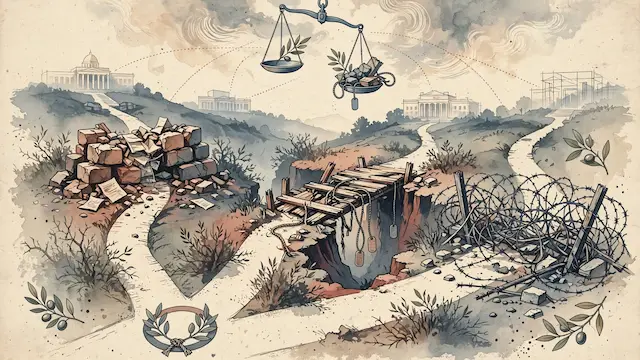
Negotiations to form a new Israeli government are intensifying, with Gadi Eisenkot, leader of the Yashar party, exploring three potential scenarios for a power transition. However, disagreements over the prime minister's role, the ultra-Orthodox conscription issue, and potential cooperation with Arab parties threaten to derail coalition efforts. Following the October 27 elections, no single bloc secured a Knesset majority, leaving the Netanyahu bloc with 53 seats, four parties seeking change with 48, and Arab factions with 19. While opponents could theoretically muster 67 seats, forming a cohesive coalition remains a significant challenge for Eisenkot, who has until early December to finalize an agreement.
The first scenario involves a national unity government including Likud. While talks are ongoing, Netanyahu insists on retaining the premiership, while Eisenkot demands it for himself. A proposed rotation has not resolved this core conflict, as Yashar seeks a full four-year term for Eisenkot, fearing Netanyahu would maintain the current power structure. Likud's reported demands, such as abandoning a state commission of inquiry into the October 7 events, adopting a specific conscription law, and including Itamar Ben-Gvir in the government, have also surfaced, though the party has disputed the official presentation of all these conditions. Naftali Bennett supports a broad government but insists Eisenkot should be the first prime minister, while Yair Golan opposes any deal allowing Netanyahu to retain power.
The second scenario focuses on including ultra-Orthodox parties, particularly United Torah Judaism. The primary obstacle is the exemption of yeshiva students from military service. Eisenkot's initial proposal to exempt 3% of each draft cohort was rejected by Degel HaTorah's leadership. Negotiations are now awaiting a revised offer on the number of exemptions. The ultra-Orthodox parties also seek a temporary halt to arrests of draft-dodging yeshiva students and a law to that effect before the first state budget is approved, demanding written guarantees from all 48 opposition MKs. A three-month transition period without arrests is also being discussed, but legal constraints complicate these demands before a new cabinet is formed. Former Deputy Attorney General Raz Nizri is involved in finding a legal compromise. However, even if an agreement is reached with United Torah Judaism, Shas, led by Aryeh Deri, has not shown readiness for full negotiations with Eisenkot due to Deri's close ties with Netanyahu.
The third option is a minority government with external support from Arab parties. This would allow the opposition to change leadership without Likud or the ultra-Orthodox factions. Israeli parliamentary rules permit a government to be approved by a majority of voting MKs, even without a stable 61-seat coalition. Avigdor Lieberman strongly opposes this scenario, deeming it politically unstable due to reliance on Arab factions, despite supporting Eisenkot. Bennett also has doubts, while Golan is open to cooperation with Ra'am and the Joint List. Arab parties are considering external support in exchange for agreements on local authority funding and policies concerning the Arab population. A vote on a bill to prevent the return of bodies of terrorists to their families could further complicate coalition talks, particularly for Yisrael Beiteinu and Bennett's party, who must balance security stances with coalition negotiations.
Further complicating the situation are disagreements between Netanyahu and Eisenkot regarding the threat from Iran, with Netanyahu accusing opponents of underestimating the danger and Eisenkot disagreeing on the need for immediate military action. Eisenkot has indicated he will not prolong negotiations indefinitely and is prepared to bring the matter to a Knesset vote, forcing MKs to choose between supporting a new government or facing new elections with Netanyahu leading a caretaker government. The most significant progress has been in talks with United Torah Judaism, though a final agreement remains distant. The outcome hinges on resolving who will lead the government, the conscription law, and the acceptance of Arab party support.
Keep up with
Mentioned


