Israel Must Raise Taxes for Economic Improvement, Says Central Bank Chief
Translated & summarized from Vesty by baba
Governor of the Bank of Israel Amir Yaron stated that Israel must raise taxes to improve its economy, with the extent depending on the defense budget. He also urged reducing the debt-to-GDP ratio and increasing labor force participation. The Bank of Israel held its interest rate at 3.25% despite slowing inflation, citing geopolitical and economic uncertainties. The central bank may intervene in currency markets if the shekel's depreciation threatens inflation targets.
The story in 5 lines · by baba
- Israel must raise taxes to improve its economy, according to Bank of Israel Governor Amir Yaron.
- The extent of tax hikes will depend on the defense budget, Yaron stated.
- The Bank of Israel maintained its benchmark interest rate at 3.25% due to economic uncertainties.
- Governor Yaron warned against delaying fiscal decisions and holding new elections.
- The central bank may intervene in currency trading if the shekel's depreciation threatens inflation goals.
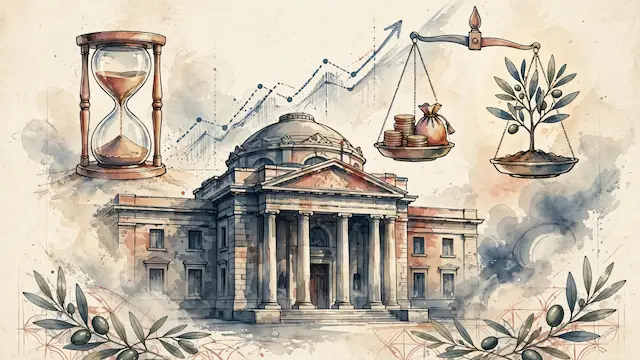
To improve its economic situation, Israel will need to raise taxes, stated Amir Yaron, the Governor of the Bank of Israel, in an interview with Ynet on Monday, November 23. The extent of the tax increase will largely depend on the defense budget. Yaron also emphasized that any new government will face the challenge of reducing the debt-to-GDP ratio, which has risen from approximately 60% to 70%. He called for more predictable defense spending, increased army efficiency, and investments in infrastructure and education. Additionally, Yaron proposed changes to employment incentives to encourage greater participation in the labor market by Haredi men and Arab women, thereby expanding the tax base. The Bank of Israel's team is already in contact with Ministry of Finance officials who are preparing tax reforms. The central bank governor warned that delaying these decisions and holding new elections would be costly for the country. With the government not yet formed, 2027 could begin with a provisional budget, potentially extending into the summer if the political stalemate persists. The lack of a defined budget policy makes it difficult to estimate future expenditures and deficits.
On the same day, the Bank of Israel decided to maintain its benchmark interest rate at 3.25%, despite annual inflation slowing to 1.1%, nearing the lower bound of its 1-3% target range. The prime rate will remain at 4.75%, with the next decision expected in early January 2027. This decision aligned with forecasts from most economists, who anticipated the rate would be held steady due to a strengthening dollar and euro, potential U.S. rate hikes, and uncertainty surrounding Israel's government and budget. Yaron noted that the regulator has already lowered the rate four times but cautioned that geopolitical uncertainty, a weakening shekel, and the possibility of overseas rate increases necessitate a cautious approach. Despite these concerns, business activity in Israel remains high, and unemployment is low. The Bank of Israel anticipates inflation returning to around 2% by early 2027. The shekel has weakened by 6-8% against major currencies since September, which could impact the prices of imported goods, raw materials, airfare, and services in the coming months. A scenario where U.S. rates rise while Israeli rates fall could further incentivize capital outflow and pressure the shekel. Yaron indicated the Bank of Israel might intervene in currency trading if exchange rate movements threaten the inflation target, though no specific dollar level has been set for such action. The rate decision followed a significant drop on Wall Street, with the Nasdaq and S&P 500 declining sharply, and Nvidia shares losing substantial value. Yaron suggested this could be a market correction after rapid growth in the chip and AI sectors, noting that these companies have viable businesses and cash flow, and he sees no signs of a 2008-style crisis.
Keep up with
Mentioned
The same event, reported separately by each outlet. Open a few to compare what different newsrooms emphasize — and what they leave out.
Centre 2Other 2




Not the same event — other stories that share this one’s people, places, or theme: background, reactions, and follow-ups.