
Turkish Admiral Warns US Policy Unchanged Despite Congress Shift
Translated & summarized from Maariv by baba
Turkish Admiral Cihat Yaycı stated that US policy in the Middle East, including its support for Israel, remains consistent despite shifts in Congress and presidential administrations. He criticized US sanctions on Turkey and the non-delivery of F-35 aircraft, attributing these issues partly to ineffective Turkish lobbying. Yaycı explained that US foreign policy priorities, such as Israel's security and oil flow, are constant, and that recent military actions are influenced by domestic economic factors and legal time limits.
The story in 5 lines · by baba
- US policy toward Israel remains constant regardless of administration, according to Admiral Cihat Yaycı.
- Turkey faces political obstacles in receiving F-35 jets and engines, hindering its program participation.
- Admiral Yaycı cited ineffective Turkish lobbying as a weakness in influencing US policy decisions.
- US foreign policy priorities in the Middle East are Israel's security, oil flow, and regional power balance.
- Economic concerns, not solidarity, drove US voter opposition to military actions, Yaycı claimed.
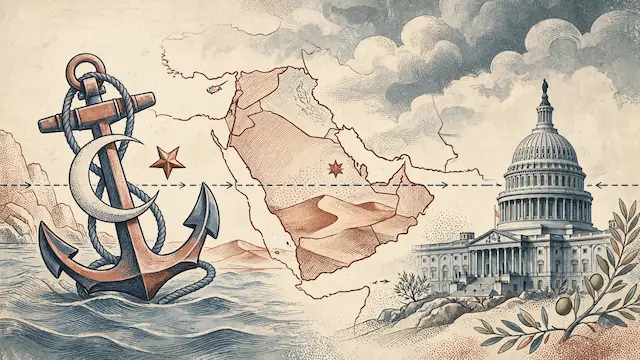
Turkish Admiral Cihat Yaycı has analyzed the implications of the US Congress's shift, cautioning against expectations of significant changes in relations with Washington. He highlighted a contradiction in US policy, questioning why sanctions were lifted for Syria but remain imposed on Turkey, a NATO ally, under the "Countering America's Adversaries Through Sanctions Act." Yaycı noted that Turkey, despite paying for F-35 aircraft as a program partner, has not received them, and similar political obstacles hinder the delivery of F-35 engines. He believes Ankara should not anticipate a short-term positive outcome.
According to Yaycı, a key weakness for Turkey in Washington is the lack of consistent and effective lobbying. He pointed to the intensive efforts of Greek, Greek Cypriot, and Armenian lobbies in Congress to block Turkey's return to the F-35 program and engine procurement. Yaycı stressed the need for Turkey to regularly present its arguments to lawmakers and decision-makers, responding to objections with concrete data in real-time.
While acknowledging that the US system of checks and balances now complicates President Trump's ability to advance appointments, budgets, and defense deals with a Democratic Congress, Yaycı argued that Turkey errs in pinning hopes on the US President's party. He stated that US presidential administrations change, and methods evolve, but the country's core objectives and bureaucracy remain constant.
Regarding the Middle East, Yaycı asserted that US policy is based on three enduring principles: Israel's security and existence, the free flow of oil to the West, and preventing the rise of another dominant power in the region. He suggested that American voters' opposition to strikes was driven by economic concerns like inflation and oil prices, not solidarity with Tehran, noting a significant drop in oil transit through the Strait of Hormuz. Yaycı added that the temporary pause in US strikes on Iran is due to a 60-day limit allowing presidential military action without congressional approval, and that Trump intends to resume attacks. He reiterated that despite the recent Israeli elections and calls within the Democratic party for congressional oversight of arms shipments and annual military aid, fundamental US support for Israel remains consistent across administrations.