
Public Health Doctors' Chairman: Israel is 'Rabies-Stricken'
Translated & summarized from Maariv by baba
Professor Hagai Levine, Chairman of the Association of Public Health Physicians, declared Israel a "rabies-stricken country" due to insufficient veterinary services and unvaccinated animals. He criticized the government's delayed recognition of the outbreak as an emergency and highlighted the critical need for full veterinary staffing and public awareness. Levine recommended securing urban trash cans, vaccinating pets, and reporting stray animals to prevent further spread.
The story in 5 lines · by baba
- Israel is now a "rabies-stricken country" due to multiple factors, says Prof. Hagai Levine.
- Levine criticized the lack of emergency recognition and understaffing of veterinary services.
- He urged securing urban trash cans to prevent animals from entering residential areas.
- Pet owners must ensure their animals are vaccinated and microchipped, Levine stated.
- Citizens should report stray animals from a safe distance, he advised.
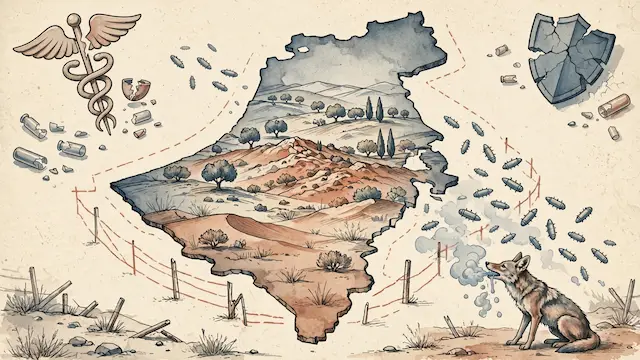
Israel has become a "rabies-stricken country" due to a complex problem involving open trash cans, unvaccinated animals, and understaffed veterinary services, according to Professor Hagai Levine, Chairman of the Association of Public Health Physicians. Speaking on 103FM, Levine explained that while a simple magic solution doesn't exist, authorities could have better maintained borders and rabies prevention. He criticized the lack of recognition of the rabies outbreak as an emergency situation by the Ministry of Agriculture, even when aerial vaccination efforts were potentially hindered by military circumstances.
Levine stated he had been raising the alarm about the situation for a year, but there was a lack of understanding from system leaders that it constituted an emergency. He pointed to the veterinary services operating at only 10% capacity, making it impossible for staff to adequately address the outbreak. He stressed the need to fill veterinary positions, especially during an outbreak, to ensure proper coverage and to inform the public to be more cautious.
To combat the spread, Levine suggested practical solutions beyond hunting infected animals. He emphasized the importance of securing trash cans in urban areas to keep animals out and urged pet owners to ensure their animals are vaccinated against rabies and microchipped. He also advised citizens who encounter stray animals to photograph and document their location from a safe distance and report them to local authorities.
If exposed to a potentially rabid animal, Levine advised immediate distancing, reporting to the local authority, and insisting on action. He reiterated the necessity of full veterinary staffing, rather than leaving positions vacant or part-time, to manage such public health crises effectively.
Keep up with
Mentioned


