
UNRWA: 94% of Gaza Residents Need Urgent Aid, 85% Lack Safe Water
Translated & summarized from Al-Shams by baba
The UNRWA reports that 94% of Gaza's population needs urgent aid due to damaged infrastructure and a lack of essential services. A November 2026 UN report found 85% of households face water insecurity, with 66% lacking minimum drinking water. The worsening conditions pose significant health risks, especially to vulnerable groups.
The story in 5 lines · by baba
- 94% of Gaza's population requires urgent humanitarian assistance, according to UNRWA.
- 85% of households in Gaza experience moderate to severe water insecurity.
- 66% of families in Gaza do not receive the minimum daily drinking water requirement.
- Damaged infrastructure and a lack of basic services contribute to the crisis.
- Deteriorating humanitarian conditions increase health risks for vulnerable populations.
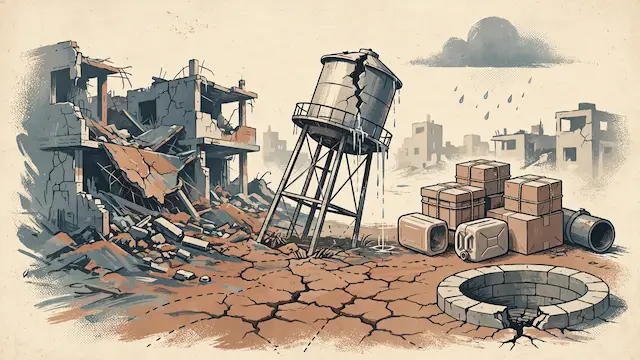
The United Nations Relief and Works Agency (UNRWA) has reported that 94% of Gaza's population requires urgent humanitarian assistance, highlighting the severe crisis in the Strip. This situation is exacerbated by damaged infrastructure, including water and sanitation networks, and a persistent lack of essential services. Families displaced within Gaza face difficult living conditions.
A November 2026 report from the UN's Water and Sanitation Cluster indicated that 85% of assessed households experience moderate to severe water insecurity. Furthermore, 66% of families are not receiving the minimum recommended daily water intake of six liters per person for drinking.
The crisis is worsening as the ability to provide basic necessities declines. Families struggle to secure safe drinking water, sanitation, and adequate shelter. The deteriorating humanitarian conditions increase health risks, particularly for children, the sick, and the elderly.
Keep up with
Mentioned
Not the same event — other stories that share this one’s people, places, or theme: background, reactions, and follow-ups.
