
Israel's Electricity Authority Proposes Cuts to Solar Rooftop Incentives Amid Pollution Concerns
Translated & summarized from Calcalist by baba
Israel's Electricity Authority is proposing to cut incentives for solar rooftop installations, a move critics say will hinder renewable energy goals and worsen air pollution. The proposed changes include tariff reductions and shorter guaranteed periods for new solar systems. Environmental groups and local authorities are strongly opposing the plan, warning of significant financial losses and a setback for clean energy. The Authority argues that falling equipment costs justify the tariff adjustments, while public feedback is still being considered.
The story in 6 lines · by baba
- Israel's Electricity Authority plans to cut solar rooftop incentives, potentially increasing air pollution.
- Tariffs for solar energy could decrease by 20% by 2030, with shorter guaranteed periods.
- Israel is struggling to meet renewable energy targets, with only 16.7% of electricity from renewables.
- Environmental groups call the proposed cuts a 'death blow' to the solar industry.
- Local authorities warn of substantial financial losses from reduced solar revenue.
- Critics argue the cuts ignore broader benefits of renewable energy like reduced air pollution deaths.
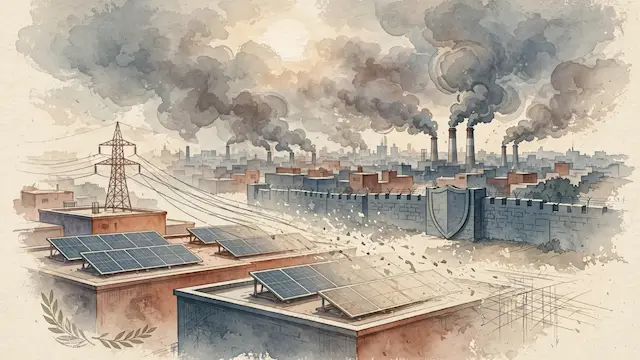
Israel's Electricity Authority is reportedly planning to significantly reduce financial incentives for solar rooftop installations, a move critics warn will harm the renewable energy sector and exacerbate air pollution. The proposed changes, currently under public review, aim to decrease tariffs for solar energy generated on rooftops by approximately 20% by 2030, with potentially deeper cuts in sunny peripheral areas. Additionally, the guaranteed tariff period for new installations would be shortened from 25 to 20 years for systems installed from 2027, and to 17 years for those installed from 2030. The municipal premium, an extra incentive, is also slated for a dramatic reduction. These changes come at a time when Israel, one of the most polluted OECD countries, struggles to meet its renewable energy targets, with only 16.7% of its electricity generated from renewables by the end of 2025, far below the government's goal of 20% and the global average of about 34%.
Environmental organizations, including Greenpeace, the Society for the Protection of Nature, and the Israeli Forum for Energy, have strongly opposed the proposed cuts, calling them a "death blow" to the industry. They argue that these changes will significantly lengthen the payback period for solar investments, making them less attractive and potentially halting projects. Local authorities, who have invested heavily in solar installations on public buildings, also face substantial financial losses, impacting their ability to fund public services. Critics point out that while the Electricity Authority cites falling equipment costs as justification for reduced tariffs, this overlooks other significant investment costs and the broader benefits of renewable energy, such as reduced mortality from air pollution and enhanced energy security.
The Electricity Authority, however, maintains that falling solar equipment prices are leading to record profits for rooftop owners. The proposed revisions are part of a broader regulatory shift that could see larger commercial and public building solar systems transition to the free market. The Ministry of Environmental Protection, which advocates for rooftop solar over land-based farms, fears the changes will undermine the democratization of energy, limiting access for ordinary citizens. The Authority stated that public comments are being considered before a final decision is made.