
Swimmer Crosses Strait of Hormuz Amid Attacks, Witnesses Oil Tanker Hit
Translated & summarized from Israel Hayom by baba
British endurance swimmer Lewis Pugh swam approximately 15 kilometers across the Strait of Hormuz over three days to raise awareness about the environmental dangers of ongoing attacks on shipping. During his swim, Pugh witnessed an oil tanker being hit by explosions and a gas tanker on fire, describing the water around the burning vessel as "burning." He highlighted the severe, long-term threat of oil spills and pollution to the region's marine ecosystems. Pugh, a UN Patron of the Oceans, aims to promote marine protection through his extreme swimming challenges, calling for an end to the war and the cleanup of pollution.
The story in 5 lines · by baba
- Swimmer Lewis Pugh crossed the Strait of Hormuz amid ongoing attacks on ships.
- Pugh witnessed an oil tanker hit by explosions and a gas tanker on fire.
- The swimmer aimed to highlight the environmental threat of the conflict to marine life.
- He swam approximately 15 kilometers over three days in the strategic waterway.
- Pugh called for an end to the war and cleanup of pollution in the region.
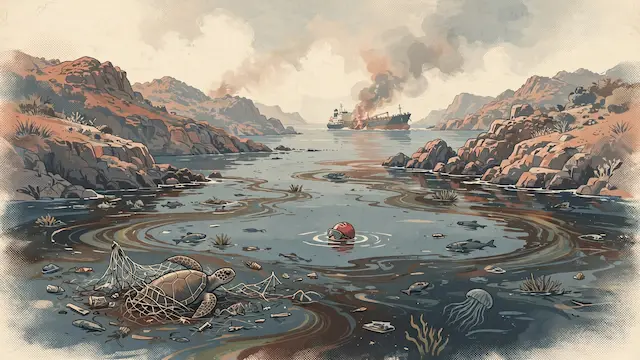
British endurance swimmer Lewis Pugh, 56, undertook a perilous swim across the Strait of Hormuz this week, navigating waters where oil tankers and ships have been attacked. Pugh, who also serves as a UN Patron of the Oceans, swam approximately 15 kilometers over three days in the strategic waterway to highlight the environmental threat posed by the conflict with Iran. He began his swim from the Musandam Peninsula and completed it around Cape Hormuz, becoming what is believed to be the first person to undertake a long-distance swim in the strait since the current hostilities began.
The mission quickly became dangerous. Within minutes of entering the water on Monday, Pugh heard two powerful explosions. "I lifted my head and saw an oil tanker that had been hit, about four kilometers away from me," he told the AP. "The explosion was so strong, two booms, and then fighter jets arrived. And at that moment I realized we had to get out of here immediately." Despite further forced stops and breaks, Pugh completed the challenge. At one point, he passed another attacked vessel from which fireballs were seen rising.
"When people think of the Strait of Hormuz, they think of a shipping lane," Pugh stated. "But it's also one of the most beautiful places I've ever seen, it's one of the natural treasures of the world. With all the ships sinking, this area is under severe threat." He warned that oil spills from damaged tankers since February could cause long-lasting harm to marine life, coral reefs, and mangrove forests, noting that such pollution can take decades to clean up.
On the second day, Pugh witnessed a gas tanker that had been hit. "I will never forget passing by that gas tanker, the smell of chemicals and then the flames - they really looked like fireballs rising to the sky. Around the ship, the water was burning," he recounted. He observed dolphins, sea turtles, and sea eagles during his swim, contrasting with the hundreds of sea turtles he saw along the Omani coast before the conflict.
The environmental danger unfolds against the backdrop of escalating tensions in the Strait, a vital global oil transit route. Before the current conflict, about one-fifth of the world's traded oil passed through the strait. Pugh divided his challenge into segments over three days, swimming for a total of about six and a half hours to minimize risk. He uses his swimming expeditions to promote marine environmental protection, having previously swum in extreme locations like the Arctic and Antarctica. His efforts have helped secure agreements protecting over 3.5 million square kilometers of ocean. "Sport opens doors, it creates dialogue, it allows people to start thinking about these important issues," Pugh said. "My message is very simple: We have to stop the war. We have to open the strait, and we have to clean up the pollution."
The same event, reported separately by each outlet. Open a few to compare what different newsrooms emphasize — and what they leave out.
Centre 1Right 1
