
Iran Accelerates Military Buildup, Sparking Israeli Concern
Translated & summarized from Cursorinfo by baba
Iran is reportedly accelerating its military potential, including underground infrastructure and weapons programs, causing alarm in Israel and the U.S., which are considering military action. President Trump has delayed a decision on strikes, while Israel's leadership is holding security meetings. Concerns also include Iran's nuclear program and potential chemical and biological weapons development. International bodies are demanding access to Iranian nuclear sites, and maritime routes face ongoing risks despite increased oil tanker traffic.
The story in 6 lines · by baba
- Iran is accelerating military buildup, including underground facilities and weapons programs, concerning the U.S. and Israel.
- The U.S. and Israel are considering military operations against Iran, but President Trump has not made a final decision.
- Israel fears Iran's rapid missile capability recovery and underground infrastructure will complicate potential strikes.
- Reports suggest Iran may be developing chemical and biological weapons, which Tehran denies.
- International bodies accuse Iran of obstructing nuclear inspections, hindering oversight of its program.
- Maritime routes, including the Strait of Hormuz, face significant risks despite record oil tanker traffic.
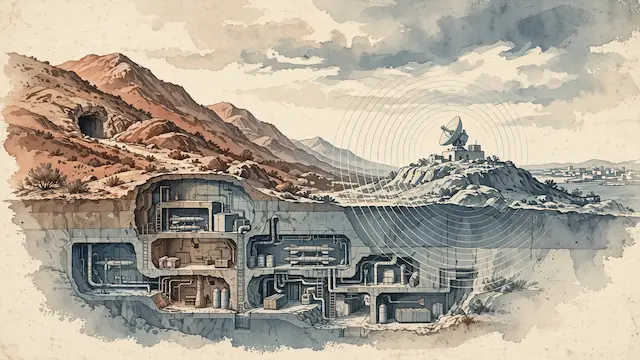
Iran is reportedly accelerating its military capabilities, including moving infrastructure underground and developing chemical and biological weapons programs, according to an analytical review by the American Institute for National Security (JINSA) published on November 20. This has heightened concerns in both the United States and Israel, with both nations considering renewed military operations against Tehran.
CBS News reported on November 20 that Washington and Jerusalem are contemplating new military actions against Iran. However, U.S. President Donald Trump has not yet made a final decision, stating on November 19 that he would observe developments after the start of next year. Sources from Israel's Channel 12 indicated that U.S. forces had been on the verge of launching significant strikes against Iran multiple times in the past month, only for Trump to cancel them each time, suggesting practical consideration of intervention.
Israel's leadership is particularly worried about Iran's rapid recovery of its missile capabilities and the relocation of nuclear and conventional military sites underground, which could complicate targeting. Prime Minister Netanyahu held national security meetings with political rivals this week, a move noted by CBS News as unusual and potentially indicative of Israel's preparation for a confrontation. A senior Israeli defense official told i24 News on November 19 that the two sides are nearing a new confrontation.
Reports of Iran's potential development of chemical and biological weapons have also surfaced. Trump stated in a November 19 interview with Fox News that Tehran is exploring such technologies. Axios and The New York Times reported that Mossad chief Roman Gofman briefed U.S. officials on evidence of Iran's advancing chemical program, including alleged weapons tests. Iran denies these accusations, with Foreign Ministry spokesperson Esmail Baghaei calling them a pretext for U.S. military action.
U.S.-Israeli military cooperation continues, with Admiral Brad Cooper, commander of U.S. Central Command, meeting with IDF Chief of Staff Eyal Zamir and Mossad Director Roman Gofman in Israel on November 18 for a joint situation assessment. The U.S. maintains a significant military presence in the region, with two carrier strike groups remaining after the USS George Washington departed.
International concerns are also mounting over Iran's nuclear program. On November 19, the U.S., UK, France, and Germany accused Iran of obstructing IAEA inspections and demanded restoration of access to nuclear sites damaged in June 2025. They also noted the IAEA's lack of reliable information on Iran's enriched uranium stockpiles for nearly 18 months, hindering assessment of its nuclear capabilities.
Domestically, the U.S. Senate rejected a resolution on November 19 that aimed to limit Trump's authority to order strikes on Iran, with the vote 51-48. Meanwhile, the financial cost of conflict for Washington is rising, with Deputy Pentagon Comptroller Arthur Miller reporting on November 19 that military operations have cost approximately $48 billion, covering munitions, equipment replacement, and operational expenses.
JINSA estimates Iran has launched at least 677 missiles and drones since July 7, with two occurring November 19-20. Israel is enhancing its air defense, with the David's Sling system reportedly upgraded to intercept a wider range of ballistic threats. Tensions persist on maritime routes, with oil tanker traffic through the Strait of Hormuz reaching a daily record of approximately 28 million barrels on November 19. However, shipping risks remain, as evidenced by a damaged tanker near Oman on November 18 and an incident involving an armed boat near Yemen on November 20. The International Energy Agency's executive director, Fatih Birol, warned on November 19 that the conflict and shipping disruptions pose the greatest threat to energy security in history, surpassing the 1970s oil shocks.
Mentioned




