
Shuafat Refugee Camp Resident Fears Revenge Killing After Boy's Murder
Translated & summarized from Hamal by baba
A resident of the Shuafat refugee camp fears a cycle of revenge killings after 10-year-old Kusai Al-Julani was shot and killed. The resident cited ongoing clan feuds, an illegal arms market, and a lack of effective governance by Israeli authorities as contributing factors. Police are investigating the murder, suspecting it's linked to a dispute between criminal families, but the resident believes arrests won't end the violence and called for increased security presence and proactive law enforcement.
The story in 5 lines · by baba
- A Shuafat refugee camp resident fears revenge killings after a 10-year-old boy was murdered.
- The boy's murder is suspected to be linked to ongoing feuds between criminal families.
- An anonymous resident described an illegal arms market and lack of governance in the camp.
- Police have intensified their investigation into the shooting death.
- The resident called for more proactive security measures to prevent future violence.
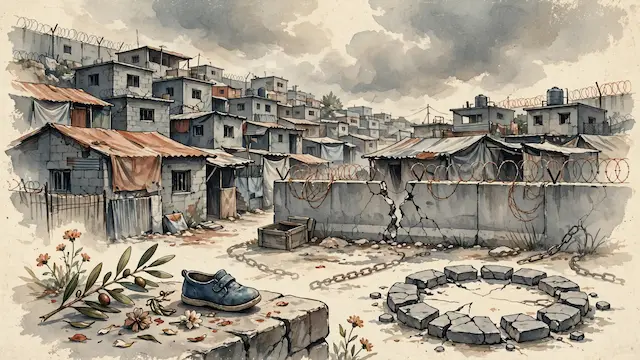
A prominent resident of the Shuafat refugee camp in East Jerusalem has expressed deep concern that the recent murder of a 10-year-old boy, Kusai Al-Julani, could ignite a new cycle of revenge killings. The resident, who spoke to Walla on condition of anonymity for fear of his life, described the camp as being in shock over the brutal incident, which occurred as the boy was on his way to school. He warned that the murder, which he believes stems from a feud between criminal families, is likely to lead to further violence due to ongoing clan rivalries.
Police suspect the shooting is linked to a dispute between criminal families, with security footage showing a motorcyclist approaching Al-Julani and shooting him at close range. The investigation has been intensified by Jerusalem District Commander Avshalom Peled, but the resident remains skeptical that arrests will quell the violence, viewing it as another case file among many. He described a pervasive illegal arms market within the camp, where weapons are allegedly rented out for use in clan conflicts, a reality he claims Israeli police are aware of but unable to effectively address.
The resident criticized the Israeli government and police for a lack of governance in the camp, which he described as a lawless territory despite being within Jerusalem's municipal boundaries. He highlighted the camp's location beyond the separation barrier, leading to a sense of neglect and enabling unchecked movement of people and goods, including weapons and drugs. He also noted a perceived disparity in policing, with authorities primarily intervening only after serious incidents occur, leaving residents feeling abandoned and discriminated against compared to nearby Israeli neighborhoods.
He further criticized the investigation into Al-Julani's death, suggesting it was insufficient and did not involve questioning the involved families, who are known to police. The resident called for a more proactive approach from security forces, including regular patrols, arrests, and seizures of weapons and drugs, to prevent future tragedies. He fears that the child's family will seek revenge once they identify the killer, potentially leading to further bloodshed, property damage, and arson within the camp.
Mentioned




