
Rabies Cases Surge in Israel Following Woman's Death
Translated & summarized from Kan News by baba
A woman's death from rabies has highlighted a significant increase in animal rabies cases across Israel, with a 250% rise in three years. Health officials are urging immediate treatment after bites or saliva exposure, involving wound washing and vaccinations. Factors contributing to the spread include changes in wild animal behavior and increased movement of unvaccinated dogs from certain areas. The Ministry of Health is contacting people potentially exposed to a rabid dog in Kfar Shmuel.
The story in 5 lines · by baba
- A woman died from rabies, prompting urgent public health warnings in Israel.
- Rabies cases in animals have surged 250% in three years, reaching 102 in 2023.
- The disease has spread to central Israel, where it was not previously observed.
- Immediate treatment after potential exposure includes wound washing and vaccinations.
- Factors contributing to the outbreak include animal behavior and uncontrolled dog movement.
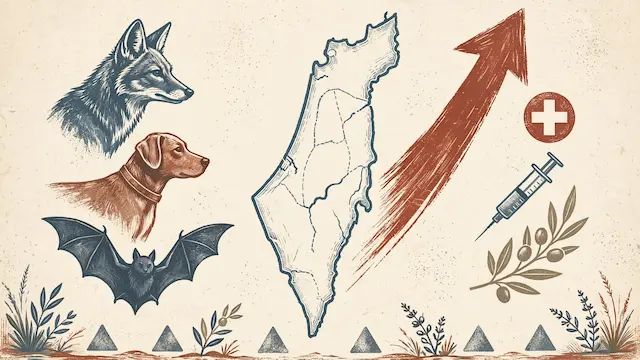
A woman in her 30s died from rabies on Saturday, prompting renewed attention to the dangerous viral disease in Israel. The illness, which affects the central nervous system of mammals, is transmitted primarily through the saliva of an infected animal via bites or scratches, or when saliva contacts open wounds or mucous membranes. The incubation period can range from a week to a year, with no symptoms or diagnostic tests available during this time. Once symptoms appear, rabies is almost always fatal, with very few survivors worldwide, according to the World Health Organization. Survival hinges on prompt preventative treatment before symptoms manifest.
Following the woman's death and amid rising rabies cases, health authorities are emphasizing the importance of immediate action after potential exposure. The Israeli Ministry of Health advises washing any wound with soap and water for about 15 minutes and immediately seeking care at a health bureau or emergency room for a series of vaccinations and, in some cases, antibodies. Even saliva on an open wound is considered an exposure.
Confirmed rabies cases in animals have significantly increased, rising from 29 in 2022 to 102 in 2023, and a projected 57 in 2024 and 120 by early 2026. This represents a 250% increase over three years. The disease's geographical spread has also expanded, with cases now documented in central Israel where it was previously unobserved. Factors contributing to the surge include changes in wild animal behavior, with foxes and jackals entering urban areas for food, the cessation of aerial vaccination baiting near borders during conflict, the adoption of pets from conflict zones and Palestinian Authority areas without proper oversight, and the uncontrolled entry of infected dogs from the West Bank.
The case that led to the woman's death involved a dog in Kfar Shmuel that had been wandering for over a month. The dog was collected in late August, underwent spaying and a rabies vaccination, but developed neurological signs and died the following day. Its body was disposed of without examination. The Ministry of Health has urged individuals who had contact with the dog since August 17 to report to health bureaus, with potential exposure also noted at a playground in Kfar Rut on August 26-27.
Mentioned


