
Trump's 'Swiss Cheese' Scenario: Easing Iran Sanctions Without a Deal
Translated & summarized from Maariv by baba
Researcher Trita Parsi proposes a "Swiss cheese" scenario where President Trump might ease sanctions on Iran without a formal deal, allowing enforcement to gradually weaken. This approach aims to de-escalate tensions and avoid further conflict, while allowing countries to increase trade with Iran. Parsi believes this is a more likely outcome than renewed war or a peace agreement, given the political risks for Trump and ongoing disputes between the US and Iran.
The story in 5 lines · by baba
- Researcher Trita Parsi suggests Trump may ease Iran sanctions via a "Swiss cheese" scenario without a deal.
- This strategy involves declaring victory while gradually weakening sanctions enforcement.
- Asian and Middle Eastern countries could increase trade and investment with Iran.
- Parsi sees this as a way to de-escalate conflict without formal agreements.
- He believes this is more likely than renewed war or a peace deal.
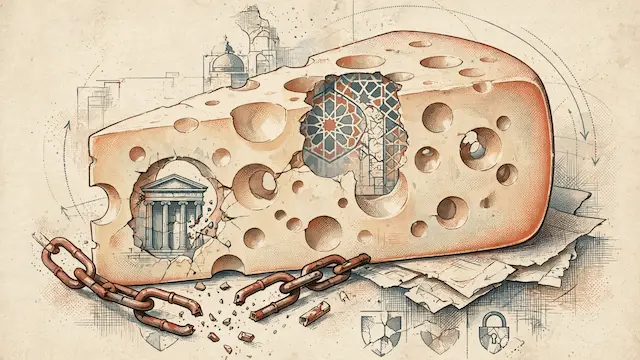
Amidst Israeli pressure to escalate actions against Iran, researcher Trita Parsi has outlined a surprising scenario where President Donald Trump might withdraw from direct confrontation without a formal agreement. This strategy, dubbed the "Swiss cheese solution," involves declaring victory, maintaining sanctions on paper, but allowing their enforcement to gradually weaken. This would create loopholes in the US enforcement system, enabling Asian and Middle Eastern countries to increase trade and investment with Iran beyond current limits.
Parsi suggests this approach would allow Washington to claim the sanctions regime remains intact while Tehran would not feel compelled to challenge the weakened enforcement. He argues this is the only viable path for a US withdrawal from conflict without a deal that could be sustained long-term. A complete, strict enforcement of sanctions after disengagement would risk continued confrontation and potential escalation, whereas gradual erosion could de-escalate tensions without formal agreements.
The researcher emphasizes that reduced risk of war does not automatically increase the likelihood of a deal. Significant disputes remain between the US and Iran, including the fate of Iran's enriched uranium stockpile, its enrichment program, regional ceasefires, and sanctions relief. Furthermore, Trump might face political repercussions for making concessions to Tehran.
Consequently, Parsi believes a more probable outcome than renewed war or a peace agreement is an intermediate state. In this scenario, Trump would declare victory, withdraw US forces, step away from negotiations, and publicly maintain that sanctions are in effect, while in practice, their enforcement would be allowed to wane.
Parsi clarifies that the "Swiss cheese" scenario is not his preferred solution. He advocates for a peace agreement that would end decades of hostility, prevent nuclear proliferation, open Iran's economy to American companies, and contribute to regional stability. However, such a deal would require Trump to compromise, potentially admitting failure of his prior military strategy, making the option of disengagement without a deal more appealing to him.