Accusations of Terrorism Against Arab Knesset Members Harm Israeli Society
Translated & summarized from Alarab by baba
Accusations of terrorism against Arab Knesset members by far-right figures are creating a dangerous atmosphere in Israel, fostering hatred and potentially leading to violence against Arab citizens. Recent incidents of vandalism and a hit-and-run attack highlight the risks, exacerbated by the expansion of firearm permits. The author calls on political leaders, including Prime Minister Netanyahu, to cease hostile rhetoric and work towards mutual respect, equality, and partnership between Arabs and Jews for a secure future.
The story in 6 lines · by baba
- Accusations of terrorism against Arab Knesset members by the far-right endanger their safety and Arab-Jewish relations.
- Incitement against Arab citizens is spreading from politicians to segments of the Jewish public, fostering hatred.
- Recent incidents include mosque vandalism in Al-Duhay and a hit-and-run in Kafr Qasim.
- Expansion of firearm permits by Minister Itamar Ben-Gvir is seen as a risk amid rising tensions.
- Political leaders, including PM Netanyahu, are urged to stop fueling hostile rhetoric.
- The author advocates for mutual respect, equality, and partnership for a secure future.
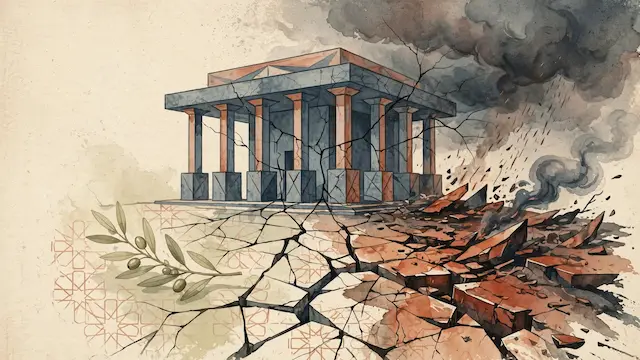
Accusations of terrorism leveled against Arab members of the Knesset (MKs) by far-right politicians and figures pose a genuine threat to their safety and to Arab-Jewish relations, according to Dr. Saleh Najidat. These accusations and incitement are not confined to parliamentary halls but permeate segments of the Jewish public, fostering animosity and hatred towards Arab citizens, leading some to view them as enemies rather than citizens with rights and duties.
The danger of this incitement lies in its potential to escalate from rhetoric to actions, encouraging extremist groups to attack Arab citizens, their property, and their holy sites. Recent incidents include the partial burning of a mosque and racist graffiti in the village of Al-Duhay, and a hit-and-run incident in Kafr Qasim that injured several citizens. The author stresses the need for serious, transparent investigations and accountability for those involved.
Continued racist attacks and the unchecked actions of extremist groups could lead to dangerous escalation and widespread insecurity affecting both Arabs and Jews. Concerns are amplified by the National Security Minister Itamar Ben-Gvir's policy of expanding firearm permits, which has reportedly led to hundreds of thousands of new licensed gun holders. The proliferation of weapons among civilians, without strict oversight and accountability, is seen as an additional risk amid the prevailing atmosphere of incitement and hatred.
Najidat places significant responsibility on the political leadership, particularly Prime Minister Benjamin Netanyahu and ministers who fuel hostile rhetoric against Arab citizens. He argues that official statements have a considerable impact on public opinion and can be exploited by extremists to justify their actions. Leaders are urged to extinguish, not fuel, the fires of hatred.
The author acknowledges that the Jewish community is not monolithic in its views on Arab citizens, with some seeking to delegitimize and exclude them, while others advocate for partnership and equality. This internal diversity suggests that the future of relations remains open to multiple possibilities, with partnership and mutual respect offering a path to a better future. Ultimately, the author calls for an end to incitement against Arab MKs and the Arab community, emphasizing that while political criticism is legitimate, collective accusations of terrorism without evidence harm democracy and security, sowing hatred and paving the way for violence. Building relations based on mutual respect, equality, integrating Arab youth into state institutions, and combating crime, violence, extremism, and racism are presented as essential steps for a shared future of security and peace.