
New City 'Shira' Planned for West Samaria, Aiming for 200,000 Residents
Translated & summarized from Ice by baba
A new city, "Shira," is planned for western Samaria, east of Rosh HaAyin, to house over 200,000 residents in 60,000 housing units. Spearheaded by the Shomron Regional Council and approved by the Political-Security Cabinet in December 2025, the project aims to strengthen Israeli presence and security. The initiative is part of a larger plan to significantly increase the population in Samaria, with development contingent on infrastructure and planning completion.
The story in 6 lines · by baba
- New city "Shira" planned for western Samaria to house over 200,000 residents.
- The project includes 60,000 housing units on approximately 16,000 dunams.
- Approval was granted by the Political-Security Cabinet in December 2025.
- The Shomron Regional Council leads the initiative, citing security and strategic importance.
- The city is part of the "Million in Samaria" plan to boost regional population.
- Development requires completion of planning and extensive infrastructure.
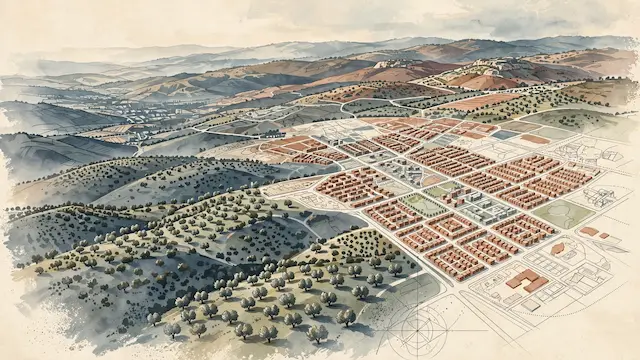
A plan to establish a new city named "Shira" in western Samaria, east of Rosh HaAyin and near Highway 5, is advancing. The Shomron Regional Council is spearheading the initiative, which is also known as "Rosh HaAyin East." The preliminary plan outlines the city covering approximately 16,000 dunams, featuring 60,000 housing units, and accommodating over 200,000 residents. This project is considered one of the largest settlement endeavors currently being promoted in the region.
The new city is slated to be built between Rosh HaAyin and the western Samaria settlements of Peduel, Brochin, and Leshem. It is intended for the general public, integrating both religious and secular populations. Construction will include both single-family homes and multi-story buildings, similar to urban development in central Israel. The city's name, "Shira," is an acronym for "Sha'ar Yerushalayim" (Gate of Jerusalem), a change from its previous designation as "Rosh HaAyin East."
The establishment of the city received approval from the Political-Security Cabinet in December 2025, with its jurisdiction and municipal symbol subsequently determined by the Interior Ministry. However, the project remains in the planning and development stages, with execution yet to begin. The Shomron Regional Council, led by Yossi Dagan, is driving the initiative in collaboration with the Israel Land Authority and the Ministry of Finance. Council officials state that work on the project has been ongoing for several years, with support from the mayor of Rosh HaAyin.
Dagan emphasized the project's scale, aiming to create a significant residential hub in western Samaria and strengthen the connection between regional settlements and central Israeli cities. The Shomron Regional Council also highlights the city's strategic and security importance, asserting its location will bolster Israeli presence and create settlement continuity between Samaria and central Israel. The council claims this will help prevent Palestinian construction expansion westward and enhance regional security, addressing issues like smuggling and illegal infiltrators. Dagan stated that a large Israeli city, coupled with infrastructure and permanent civilian presence, could strengthen the defense of central Israeli communities, calling it a "first-rate security and strategic move" and a "protective buffer" for Gush Dan cities against potential threats.
The mayor of Rosh HaAyin also expressed support, believing regulated settlement, infrastructure, and security systems would improve his city's safety and regional economy. The new city is part of a broader "Million in Samaria" plan, also led by Dagan, which includes new settlements, expanded transportation, railways, hospitals, and industrial zones. The council estimates that developing Area C could accommodate an additional 1.2 million residents, with potential for more. The plan's realization hinges on completing planning procedures, developing extensive infrastructure, and continued engagement with relevant government bodies.
Mentioned
The same event, reported separately by each outlet. Open a few to compare what different newsrooms emphasize — and what they leave out.
Centre 3Right 3Haredi 1Arab 1Other 3











