
Israel's Double Standard on Arab Votes in Politics
Translated & summarized from Arutz Sheva by baba
The election of Matan Kahana as Knesset Speaker, with support from Arab lawmakers, has ignited controversy in Israel, with critics accusing the right-wing of hypocrisy regarding the use of Arab votes. The article argues that the right has historically accepted Arab political participation but now condemns it when it benefits the opposition. This double standard is highlighted by past appointments of Arab lawmakers to key positions under right-wing governments. The author suggests that the current political climate, exacerbated by the October 7th attacks, has intensified these divisions.
The story in 5 lines · by baba
- Matan Kahana's election as Knesset Speaker, backed by Arab lawmakers, drew sharp right-wing criticism.
- Critics accuse the right-wing of a double standard regarding the legitimacy of Arab votes.
- Past right-wing governments appointed Arab lawmakers to significant positions, like Deputy Knesset Speaker.
- The article questions why Arab votes are now deemed illegitimate when they aid the opposition.
- The October 7th attacks have intensified scrutiny of Arab citizens' and lawmakers' allegiances.
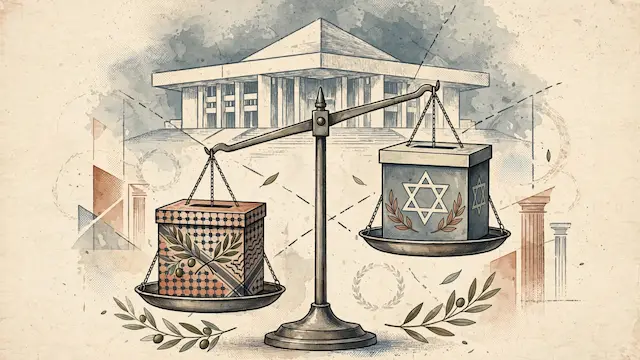
The election of Matan Kahana as Knesset Speaker, supported by Arab lawmakers, has sparked sharp criticism from the right-wing bloc, highlighting what the author calls a double standard in Israeli politics regarding the use of Arab votes. Critics have decried Kahana's election, with one ultra-Orthodox weekly publishing a cartoon depicting him with Palestinian symbols and Arabic script, titled "Rais al Knesset" (President of the Knesset).
The article argues that the right-wing, which has historically championed equality and recognized the right of Arab citizens to vote and be elected, is now deeming these same votes illegitimate when they benefit a political opponent. It points out that under previous Netanyahu governments, Arab Knesset members like Ahmad Tibi, Hamed Amar, and Issawi Frej served as Deputy Knesset Speakers, appointments that were then considered legitimate and state-sanctioned.
The author contends that the current condemnation of Arab votes for Kahana's election is hypocritical, especially given the historical acceptance of such participation. The piece also touches on the broader paradox of Arab citizens holding Israeli identity, voting, and sometimes receiving preferential treatment, while also being able to serve in sensitive parliamentary committees and government ministries.
The article suggests that the October 7th attacks and prior unrest have revealed that some Arab citizens and lawmakers openly oppose Israel, supporting Palestinian militants. However, it questions why, if Arab representation in the Knesset and political influence are permitted, their votes should be disqualified for specific outcomes. The author concludes that those who previously legitimized Arab votes for their own political gain cannot now declare them invalid simply because they aided the opposition.
Mentioned
The same event, reported separately by each outlet. Open a few to compare what different newsrooms emphasize — and what they leave out.
Right 1Other 1

Not the same event — other stories that share this one’s people, places, or theme: background, reactions, and follow-ups.




