
Israeli Real Estate Market Sees Price Drops, Developer Incentives, and Future Recovery Hopes
Translated & summarized from Ice by baba
Israeli new apartment prices are falling, while resale homes are slightly up, according to new data. Developers are facing financial difficulties and offering incentives like a NIS 1 million raffle for apartment buyers. Despite a challenging market, some industry leaders predict a recovery and price increases in the coming years, while high-end sales and specific company performances remain strong.
The story in 5 lines · by baba
- New apartment prices in Israel are declining, with resale homes seeing a slight increase.
- Developers are offering incentives, including a NIS 1 million raffle for apartment purchasers.
- The cash flow for developers has dropped by 45%, indicating financial strain in the sector.
- Industry leaders have mixed predictions, with some anticipating a market recovery and price hikes.
- A luxury apartment in Tel Aviv was sold for NIS 31 million, reflecting high-end market activity.
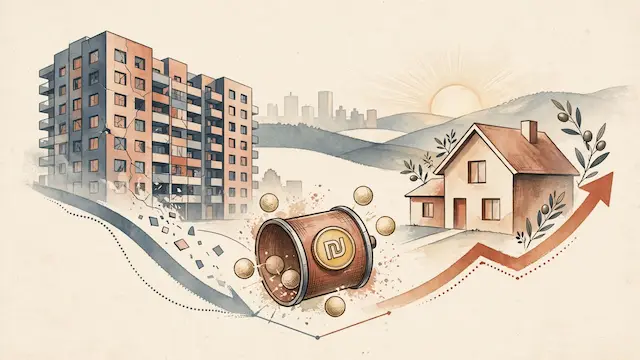
Official data from the Central Bureau of Statistics indicates a decline in new apartment prices in Israel, primarily affecting new constructions, while resale homes saw a slight increase after a significant drop earlier in the year. This trend emerges amidst a challenging year for developers, who are facing difficulties selling properties. However, some anticipate a gradual market recovery and a return to price increases within the next year.
In response to the slowdown, developers are offering significant incentives. One company is raffling off NIS 1 million among the first 30 buyers of apartments in a new project, where prices start at approximately NIS 2 million. Another developer, Gindi, is reportedly considering charging potential buyers for appointments at their sales offices, a move they believe other companies will emulate.
The real estate sector is experiencing financial strain, with a 45% drop in developers' cash flow reported by the Ministry of Finance. This situation is compounded by a corruption investigation involving a developer and two other suspects. Despite these challenges, some companies are reporting strong sales, with Africa Israel Residences selling 72% of its units by the end of 2028 and achieving a 26% gross profit margin this year.
Industry leaders express mixed outlooks. Maor Douek, CEO of Financi, noted a decrease in credit prices for real estate developers and stated that the sector is not on the verge of collapse, highlighting a shortage of rental apartments. Conversely, the President of the Contractors Association described the current real estate market as one of the most difficult since the establishment of the state, calling the rental market a "catastrophe." He, however, still advises that it is a good time to buy an apartment.
High-end transactions continue, with Israel Canada selling a 190-square-meter luxury apartment for NIS 31 million, equating to approximately NIS 150,000 per square meter. Looking ahead, Avi Badlov, Director of the Mortgage Division at Mizrahi Bank, predicts apartment prices in central Israel will rise by mid-2027 due to a decrease in new construction starts and a potential return of investors from the stock market. Meanwhile, a new policy in Petah Tikva may allow developers to provide new apartments of the same size in exchange for older ones, a move questioned by the Deputy Legal Advisor to the Government.