
UK Sanctions on Israeli Settlements Prompt Muted Response from Israel
Translated & summarized from Haaretz by baba
Britain has imposed sanctions on Israeli companies involved in settlement construction, a move that has elicited a less forceful reaction from Israel than previous similar measures. The report suggests Israel's restrained reaction may be due to surprise at the swift action of the UK's new Foreign Secretary, Ed Miliband, and a lack of effective retaliatory options. This development follows similar import bans on settlement products by other European nations and is expected to bolster calls for more stringent sanctions. Experts note this is a significant escalation, but sanctions are not yet against Israel itself, though the trend points towards increased pressure.
The story in 6 lines · by baba
- Britain imposed sanctions on Israeli companies involved in settlement construction.
- Israel's reaction was more restrained than in September when similar measures were announced.
- The UK's new Foreign Secretary, Ed Miliband, is credited with the swift implementation of sanctions.
- The sanctions target settlement construction itself, a shift from previous measures.
- The move is expected to encourage broader sanctions, including an EU-wide boycott of settlement goods.
- Experts warn of a potential escalation if sanctions extend to all entities operating in the territories.
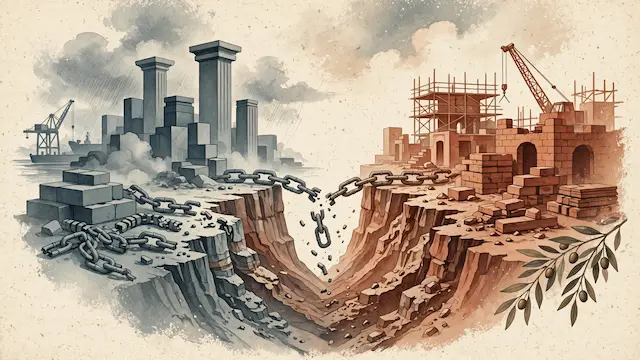
Britain has imposed sanctions on Israeli companies involved in settlement construction, a move that has elicited a less forceful reaction from Israel than previous similar measures. In September, when Britain, France, and Canada announced intentions to ban trade with settlements and expand sanctions to anyone involved in their growth, then-Foreign Minister Gideon Sa'ar retaliated swiftly. His measures included downgrading the British Consulate in Jerusalem to a "delegation" with significantly reduced activity, though the British flag still flies in Sheikh Jarrah. This time, Sa'ar issued a brief statement indicating Israel is considering a wide range of responses.
Several explanations are offered for Israel's restrained reaction. One suggests the transitional government lacks the mandate for significant policy shifts in Israeli-British relations, opting for caution until a new government is formed. A more likely reason, according to the report, is surprise at the swift action of the UK's new Foreign Secretary, Ed Miliband, who has moved quickly to implement his stated intentions after years of largely symbolic Western declarations. The timing of Britain's move, close to and immediately following Israeli elections amidst political uncertainty, may have caught Jerusalem off guard, preventing the preparation of reciprocal measures.
Another possibility is that Israel has exhausted effective retaliatory options that would not harm itself more than Britain. Potential responses like sanctions on British companies, expelling British diplomats, or limiting security and intelligence cooperation could further isolate Israel. The British action, targeting companies building in settlements, marks a significant shift from symbolic measures to direct penalties for Israeli firms, even those not ideologically driven. This is the first time settlement construction itself, rather than violence against Palestinians, is the focus of sanctions, aligning with Britain's adoption of the ICJ's advisory opinion on the illegitimacy of the occupation.
This development follows similar import bans on settlement products by Spain, the Netherlands, and Ireland, with Canada also advising businesses to avoid settlement-related activities. Britain's decision is expected to bolster calls for more stringent sanctions, including a potential EU-wide boycott of settlement goods. Professor Yuval Shany notes this is a "significant escalation" compared to sanctions on products made beyond the Green Line, but emphasizes that sanctions are not yet against Israel itself, though the trend points towards increased pressure. He cautions that if sanctions extend to all entities operating in the territories, the distinction between sovereign Israel and its policies in the occupied territories could collapse.
Despite the political gains for Miliband and the UK government, who face support from various parties, the report suggests that patience with Israeli government policy is wearing thin on both sides of the Atlantic. With Democrats now controlling both houses of Congress in the US, similar measures against settlers and settlements are anticipated in Washington. The article concludes that a constructive dialogue and tangible progress in Gaza, alongside effective action against settler violence, are needed from a new Israeli government to avoid a scenario resembling South Africa's pre-apartheid decline.
Mentioned
The same event, reported separately by each outlet. Open a few to compare what different newsrooms emphasize — and what they leave out.
Left 1Centre 1Right 3Haredi 2Arab 1Other 3










Not the same event — other stories that share this one’s people, places, or theme: background, reactions, and follow-ups.