
US Aircraft Carrier Departs Middle East Amid Force Reshuffle
Translated & summarized from JDN by baba
The U.S. aircraft carrier USS George Washington has left the Middle East, with the USS Theodore Roosevelt arriving to replace it. This reduces the number of U.S. carriers in the region from three to two. The move is a planned rotation, but its timing raises questions about U.S. readiness against Iran.
The story in 5 lines · by baba
- The USS George Washington aircraft carrier has departed the Middle East.
- The USS Theodore Roosevelt arrived in the region on Monday.
- The U.S. carrier presence in the Middle East has been reduced to two.
- Aircraft carriers enable significant U.S. air power projection from the sea.
- The departure is a planned rotation, not necessarily a policy shift.
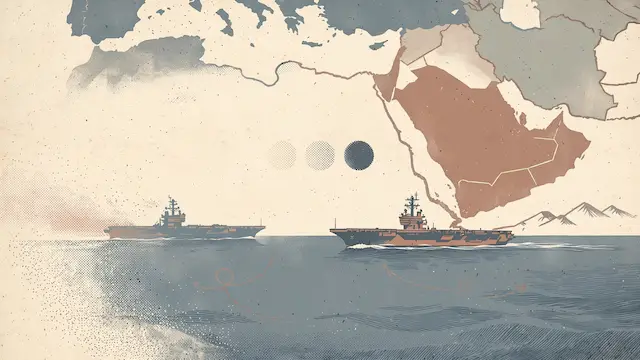
The American aircraft carrier USS George Washington has departed the Middle East, likely en route to its homeport in Japan. This move follows the arrival of the USS Theodore Roosevelt in the region on Monday. The departure signifies a shift in the U.S. naval presence, with one carrier leaving as another enters.
Previously, three U.S. aircraft carriers were operating in the Middle East. The George Washington's exit reduces this number. Aircraft carriers are crucial for projecting significant air power from the sea, independent of land-based facilities.
While the departure itself does not necessarily indicate a policy change or reduced alert status in the region, it is a planned rotation. The timing raises questions about whether it signals a decreased readiness against Iran or is simply a necessary measure due to troop fatigue.
Mentioned

