
Dollar Hits One-Year High Against Shekel Amid Interest Rate Differentials
Translated & summarized from N12 by baba
The U.S. dollar has climbed to a one-year high against the Israeli shekel, reaching approximately 3.27 shekels. This rise is driven by diverging interest rate policies between the U.S. Federal Reserve and the Bank of Israel, global market instability, and geopolitical factors. Potential factors that could weaken the dollar include a recovery in global markets and moderating U.S. inflation, while the Bank of Israel could intervene if fluctuations intensify.
The story in 6 lines · by baba
- The U.S. dollar reached a one-year high against the Israeli shekel, trading around 3.27 shekels.
- Diverging interest rate policies between the U.S. Federal Reserve and Bank of Israel are a primary driver.
- Global market volatility and a flight to the dollar as a safe-haven asset are weakening the shekel.
- Israeli institutional investors buying dollars to maintain foreign currency exposure also contribute.
- Geopolitical tensions and high energy prices add further pressure on the shekel.
- A Wall Street recovery or moderating U.S. inflation could strengthen the shekel.
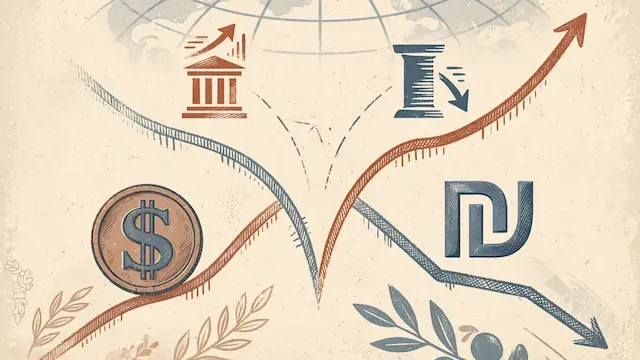
The U.S. dollar has reached a one-year peak against the Israeli shekel, trading around 3.27 shekels per dollar, marking a significant increase from its late October value of approximately 3.10 shekels. This surge is attributed to several factors, primarily the widening interest rate gap between the U.S. Federal Reserve and the Bank of Israel. The Fed is signaling further rate hikes, with some officials, like Christopher Waller, advocating for a substantial increase, while the Bank of Israel is considering rate cuts due to low inflation. This divergence makes dollar-denominated investments more attractive, drawing capital away from the shekel.
Global market volatility, particularly on Wall Street, is also contributing to the shekel's weakness. Declines in U.S. stock markets, driven by concerns over tech company financing, potential regulations, and executive resignations, prompt investors to seek the dollar as a safe-haven asset. This global trend impacts Israeli institutional investors, such as pension funds and insurance companies, who must buy dollars to maintain their foreign currency exposure targets when their overseas stock holdings decrease in value, thereby weakening the shekel.
Geopolitical tensions, especially concerning Iran, and elevated oil prices further pressure the shekel. High energy costs increase demand for dollars among importers and raise Israel's risk premium. While strong service exports, particularly from the high-tech sector, help offset import costs, the overall situation contributes to the shekel's depreciation.
However, the shekel has potential support mechanisms. A recovery in Wall Street could lead institutional investors to sell dollars, strengthening the shekel, as seen in the second quarter of the year. Changes in expectations regarding the Fed's monetary policy, particularly if U.S. inflation data moderates, could also reduce the dollar's advantage. Furthermore, strong Israeli exports, foreign investments, and significant tax payments from major companies like Nvidia, which is expected to double its tax payments in Israel, provide underlying support for the shekel. The Bank of Israel also possesses substantial foreign currency reserves and has intervened in the past to manage currency fluctuations.
The same event, reported separately by each outlet. Open a few to compare what different newsrooms emphasize — and what they leave out.
Centre 2


Not the same event — other stories that share this one’s people, places, or theme: background, reactions, and follow-ups.




