
Knesset Votes to Repeal Law Altering Judicial Appointments Committee
Translated & summarized from Globes by baba
The Knesset plenum preliminarily approved a bill to repeal a law that would have altered the composition of the Judicial Appointments Committee. The vote was 63 in favor to 47 against. The repealed law would have increased political influence in judicial appointments, while the repeal restores the previous committee structure. Justice Minister Yariv Levin criticized the move, calling it "corruption," while proponents see it as "healing and repair."
The story in 5 lines · by baba
- Knesset preliminarily approved repealing a law that would change the Judicial Appointments Committee.
- The vote was 63 in favor and 47 against, with the bill moving to committee.
- The repealed law aimed to increase political influence in judge appointments.
- The repeal restores the committee's previous composition, including Bar Association representatives.
- Justice Minister Yariv Levin called the repeal "corruption," while proponents hailed it as "healing."
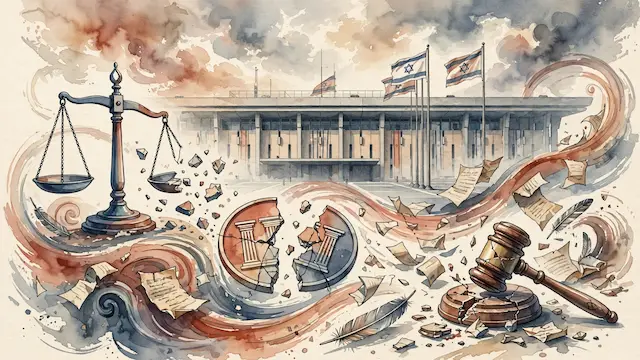
The Knesset plenum has preliminarily approved a bill to repeal a law passed by the outgoing government that would have changed the composition of the committee responsible for appointing judges. The preliminary vote saw 63 MKs in favor and 47 against, with the bill now advancing to the committee stage for further discussion.
The original law, which had not yet taken effect, stipulated that the Judicial Appointments Committee would consist of six political appointees. It would have removed representatives from the Bar Association and included nine members: two ministers, including the Justice Minister, two Knesset members chosen by the coalition and opposition respectively, three Supreme Court justices including the president, and two legal professionals appointed by the coalition and opposition. This change aimed to reduce the influence of professional bodies and increase that of political actors in judicial appointments.
With the repeal of this law, the existing composition of the committee will remain in place. This includes three Supreme Court justices, two representatives from the Bar Association, the Justice Minister, another minister, and two Knesset members. Judges are currently appointed by a simple majority, except for Supreme Court justices who require a special majority of seven out of nine votes.
MK Efrat Reiten Marom stated that the repeal marks "the beginning of healing and repair," aiming to undo "destructive and divisive" actions of the past four years. Conversely, Justice Minister Yariv Levin criticized the haste of the process, arguing it prevents the current government from stating its position. He claimed the repeal's effect is to reinstate the Bar Association's representatives, which he described as "corruption" due to potential conflicts of interest.
The explanatory notes for the repeal bill argued that the previous legislation had disrupted the institutional balance by increasing the weight of politically chosen representatives and diminishing the relative influence of professional and judicial representatives. The repeal aims to restore the previous balance until a mutually agreed-upon arrangement can be reached without compromising the rule of law or the judiciary's independence.
Mentioned
The same event, reported separately by each outlet. Open a few to compare what different newsrooms emphasize — and what they leave out.
Centre 1Right 2Haredi 2Arab 1Other 2







Not the same event — other stories that share this one’s people, places, or theme: background, reactions, and follow-ups.



