
Israel's Budget Deficit Threatens Economy With Higher Taxes and Service Cuts
Translated & summarized from Cursorinfo by baba
Israel's budget deficit, driven by war costs, is projected to increase the national debt and act as a "hidden tax" through higher taxes and reduced public services. Interest payments alone are set to reach 64.6 billion shekels in 2026, comparable to the health budget. Structural issues like long bond maturities and inflation-linked debt exacerbate the problem. Experts warn that without fiscal reform, the debt could reach 74% of GDP by 2031, urging a balanced approach to deficit reduction that protects essential investments.
The story in 6 lines · by baba
- Israel's budget deficit, worsened by war, will impose a "hidden tax" via higher taxes and service cuts.
- Interest payments on national debt are projected to reach 64.6 billion shekels in 2026, rivaling the health budget.
- The war's cost is estimated at 350 billion shekels, increasing national debt to 68.5% of GDP.
- Long bond maturities and inflation-linked debt hinder efforts to lower the debt burden.
- National debt could reach 74% of GDP by 2031 without a fiscal strategy and deficit reduction.
- Experts advise against cutting investments in education, healthcare, and infrastructure to reduce the deficit.
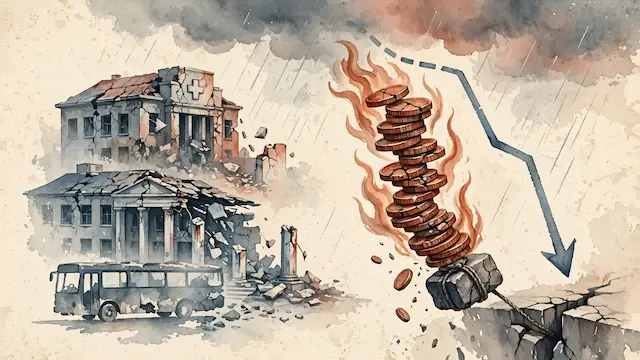
Israel's budget deficit, exacerbated by ongoing military operations, is creating a "hidden tax" that will burden citizens for years to come, even after hostilities cease. This systemic pressure on the economy will manifest as increased tax burdens, higher borrowing costs, reduced quality of public services, and slower income growth, as vast sums are diverted to debt interest payments. According to the Ministry of Finance's debt management unit, interest payments are projected to reach 57.8 billion shekels in 2025, representing about 8.9% of the total budget, and are set to rise to 64.6 billion shekels in 2026. This annual interest payment is comparable to the entire budget of the Ministry of Health. The war, estimated by the Bank of Israel to cost 350 billion shekels between 2023 and 2026, has increased the national debt from 60% to 68.5% of GDP. In 2025, debt servicing accounted for approximately 3.1% of GDP, significantly higher than the OECD average of 1.9%.
Two structural factors hinder efforts to reduce this debt burden: the average maturity of Israeli government bonds is 8.3 years, preventing quick refinancing of expensive debt at lower rates, and about 47% of the national debt is indexed to the consumer price index. Consequently, each percentage point of inflation automatically increases the national debt by roughly 6.7 billion shekels. Furthermore, high government bond yields can draw capital away from the private sector, making loans more expensive for businesses and stifling investment in production and technology.
The Bank of Israel and the International Monetary Fund warn that without a multi-year fiscal strategy and a reduction in the structural deficit to below 3.2% of GDP, the national debt could climb to 74% of GDP by 2031. Former Bank of Israel Governor Karnit Flug and economist Roi Kennet Portal noted that the government cannot simultaneously increase defense spending, cut taxes, and maintain current levels of civilian services without losing control of the debt. They urged against reducing the deficit by cutting investments in education, healthcare, and infrastructure, which are crucial for future economic growth.
Mentioned