
Knesset Member Tears Shirt in Protest Over Arab Support for Speaker Election
Translated & summarized from Alarab by baba
Knesset Member Tzviya Mor tore his shirt, a Jewish symbol of mourning, during a parliamentary session to protest the election of a Knesset speaker supported by Arab lawmakers. The act, known as 'keriah', was recontextualized from religious grief to political dissent, sparking debate on Arab representation in Israeli parliament. The article emphasizes that democratic participation and equal citizenship are fundamental rights regardless of national or religious identity.
The story in 6 lines · by baba
- Knesset Member Tzviya Mor tore his shirt in protest during a parliamentary session.
- The act of tearing a shirt, 'keriah', is a traditional Jewish symbol of mourning.
- Mor's protest was against the election of a Knesset speaker supported by Arab members of Knesset.
- The article discusses the repurposing of cultural and religious symbols in political discourse.
- It highlights the importance of Arab representation and participation in parliamentary decision-making.
- The piece asserts that equal citizenship and the right to participate are core democratic principles.
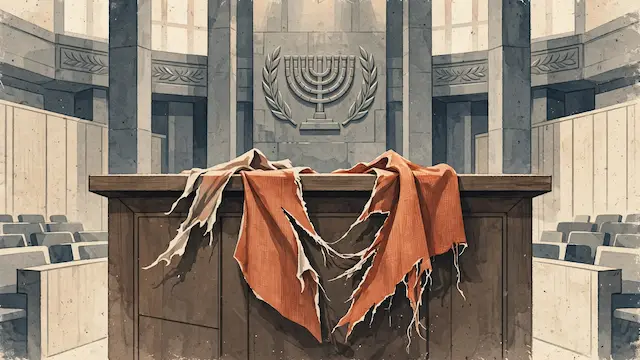
A Knesset member, Tzviya Mor, tore his shirt during a parliamentary session, an act that carries deep religious and cultural significance in Jewish tradition as a symbol of mourning, known as 'keriah'. This symbolic gesture, typically reserved for expressing grief over the death of a relative, was employed by Mor to protest the election of a Knesset speaker supported by Arab members of Knesset. The article highlights how cultural symbols can be repurposed in the political arena, carrying messages beyond their original context. The author notes that while tearing clothes is also associated with intense grief in other cultures, including Arab societies, its meaning varies by cultural and religious context. The core of the protest, according to the article, lies in the political message conveyed: using a symbol of mourning to react to Arab lawmakers' support for a parliamentary process. This raises questions about the place of Arab citizens and their representatives in parliamentary institutions, emphasizing that democratic practice relies on pluralism, disagreement, alliances, and voting, not on privileges for specific national or religious groups. The piece asserts that while every MK has the right to express dissent, Arab members also have the right to participate in parliamentary decision-making and influence the future of the state. True democracy, it argues, is tested not when outcomes align with one's desires, but when faced with disagreeable results. The article cautions against conflating an individual MK's use of a Jewish heritage symbol with the entirety of Jewish culture, or reducing an entire community to a single political stance or action. Ultimately, it concludes that equal citizenship, political representation, and the right to participate are fundamental principles that should not be affected by a person's national or religious identity, stressing that while disagreement and protest are rights, respecting others' right to participate is the essence of democracy.
Mentioned
The same event, reported separately by each outlet. Open a few to compare what different newsrooms emphasize — and what they leave out.
Centre 1Right 1Haredi 2Arab 1





Not the same event — other stories that share this one’s people, places, or theme: background, reactions, and follow-ups.
