
Israel's Electoral System Under Scrutiny Amidst Government Formation Woes
Translated & summarized from Kan News by baba
Following Knesset elections, Israeli political blocs are still negotiating government formation, with a potential unity government with Prime Minister Benjamin Netanyahu reportedly now impossible. Analysts suggest Israel's electoral system contributes to frequent political deadlock, prompting discussions on reforms like regional elections or direct prime ministerial votes. The podcast "Ad HaKatzah" explored these issues and historical decisions shaping the system.
The story in 5 lines · by baba
- Senior figures in the "change bloc" reportedly ended chances for a unity government with Netanyahu.
- Israel has faced multiple election cycles recently, often with prolonged post-election uncertainty.
- The current electoral system is criticized for frequently causing political deadlock.
- Proposed reforms include regional elections or direct election for the prime minister.
- A podcast explored historical decisions and obstacles related to Israel's electoral system.
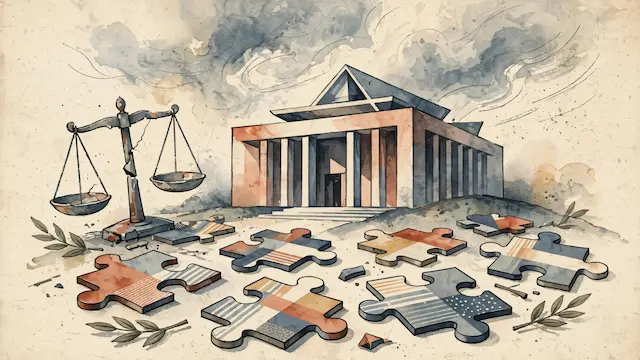
Nearly three weeks after the Knesset elections, efforts to form a new Israeli government are ongoing. Senior figures within the "change bloc" reportedly stated that any slim possibility of a unity government with Prime Minister Benjamin Netanyahu has vanished following revelations about the Prime Minister's office and alleged election interference. This situation is not unprecedented, as Israel has experienced multiple election cycles in recent years, often resulting in prolonged uncertainty about the final outcome.
The current electoral system is criticized for frequently leading to political deadlock, with government formation processes potentially stretching for weeks or even months. This has prompted discussions about whether the electoral method itself is the core problem and if changing the "rules of the game" is necessary.
In a podcast episode of "Ad HaKatzah," political commentator Yoav Krakovsky and Professor Avner Ben Zaken explored the historical decisions that shaped Israel's electoral system and the obstacles it presents. They also introduced two proposed reforms: regional elections or a direct election for the prime minister. The discussion also touched upon new AI agents and evolving international relations with Israel.
Not the same event — other stories that share this one’s people, places, or theme: background, reactions, and follow-ups.
