
IDF Uploaded Millions of Palestinian Photos to Amazon Cloud for Facial Recognition
Translated & summarized from Ynet by baba
The Israeli military uploaded 3.5 million Palestinian photos to Amazon's cloud for facial recognition tracking, according to The Guardian. The data, managed by an IDF unit called "Rolling Stone," was transferred in early 2024 to utilize Amazon's AI Rekognition platform. This usage is reportedly part of Israel's broader "Project Nimbus" cloud contract with Amazon and Google, signed in 2021. The IDF stated it does not comment on operational service details.
The story in 5 lines · by baba
- IDF uploaded 3.5 million Palestinian photos to Amazon's cloud for facial recognition, The Guardian reported.
- The data transfer was to enable use of Amazon's AI Rekognition platform for tracking Palestinians.
- The photos are managed by an IDF unit called "Rolling Stone" and stored in an Amazon data center near Tel Aviv.
- This usage is reportedly part of Israel's "Project Nimbus" cloud contract with Amazon and Google.
- AWS stated client visits to their offices are routine and not indicative of special arrangements.
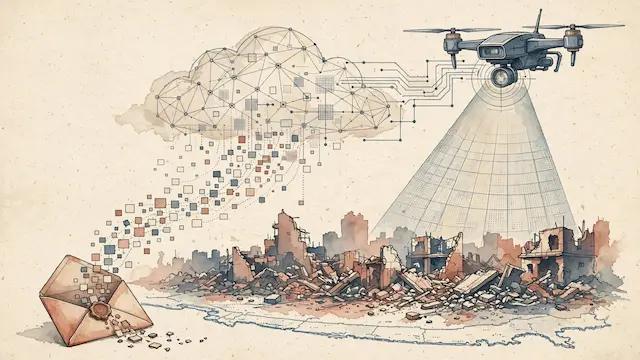
The Israeli military (IDF) uploaded approximately 3.5 million images of Palestinians to Amazon's cloud servers to facilitate facial recognition tracking, according to a report by The Guardian. The exposé, co-authored by Yuval Abraham, a co-creator of the film 'No Other Land,' reveals that a specific IDF department, responsible for a vast archive of Palestinian photos from Gaza, the West Bank, and Judea, transferred this extensive database to Amazon's cloud in the early months of the Gaza war.
In early 2024, this IDF department informed Amazon of its intention to upload the photos, enabling the use of Amazon's AI-powered Rekognition image analysis platform. The report, based on leaked documents and interviews with military sources, suggests that Israel has been transferring significant amounts of data, including sensitive intelligence and information on Palestinians, to Amazon's data centers for years. The massive photo database was reportedly uploaded to an Amazon data center near Tel Aviv by a unit known as "Rolling Stone," which serves as a central database for information on Palestinians in Gaza and the West Bank.
Abraham and Harry Davies, another producer of 'No Other Land,' claim the IDF collected photos of Palestinians passing through checkpoints after ground forces entered Gaza in October 2023, though it remains unclear if all millions of images were taken at these specific checkpoints. A military source acknowledged the use of Amazon's cloud infrastructure due to the "enormous scale" of collected images.
During the initial phase of the Gaza conflict, Israel reportedly utilized Rekognition to identify hostages and suspected militants. The documents obtained by the authors shed light on the types of data the IDF transfers to the cloud and its utilization of Amazon Web Services (AWS) for collecting and processing personal information on Palestinians. The report indicates a strengthening relationship between Amazon and the IDF throughout the war, with a small team of Israeli soldiers reportedly working from AWS offices in Tel Aviv in early 2024 to explore more efficient facial recognition applications in Gaza.
An AWS spokesperson told The Guardian that client visits to their offices are routine and any claims of these visits exceeding standard customer interactions are "false and baseless." The underlying agreement between Israel and Amazon is the multi-billion dollar "Project Nimbus" contract signed in 2021, which provides cloud services from AWS and Google to Israeli government and military entities. A former soldier described "Rolling Stone" to the organization "Breaking the Silence" in 2016 as a system centralizing information for controlling the Palestinian civilian population. The report also mentions the "Blue Wolf" application, used by soldiers in the West Bank to scan faces and access information on Palestinians, including whether they are flagged as suspects.
Mentioned
The same event, reported separately by each outlet. Open a few to compare what different newsrooms emphasize — and what they leave out.
Centre 4Arab 1Other 1






Not the same event — other stories that share this one’s people, places, or theme: background, reactions, and follow-ups.
