
Unity Tent Near Knesset Calls for Broad Government, Draws Leaders
Translated & summarized from Maariv by baba
MK Elisha Mardan established a "unity tent" outside the Knesset to promote a broad government, attracting visits from Prime Minister Benjamin Netanyahu and other political figures. The tent features a sign with the word "unity" handwritten by a fallen soldier, symbolizing a dying wish for national cohesion. The initiative aims to create a non-partisan space for dialogue and bridge political divides, with calls for leaders to cooperate and achieve consensus.
The story in 6 lines · by baba
- A unity tent established by MK Elisha Mardan aims to foster a broad government and prevent new elections.
- Prime Minister Benjamin Netanyahu and other Israeli leaders visited the unity tent outside the Knesset.
- The tent features a "unity" sign handwritten by a fallen soldier, symbolizing a dying wish for national cohesion.
- MK Elisha Mardan stressed the initiative's apolitical nature, seeking a shared space for all Israeli society.
- MK Eitan called on leaders, including PM Netanyahu and Gadi Eisenkot, to overcome differences and reach agreements.
- A student named Atniel urged leaders to bridge divides, comparing the situation to historical Israeli political moments.
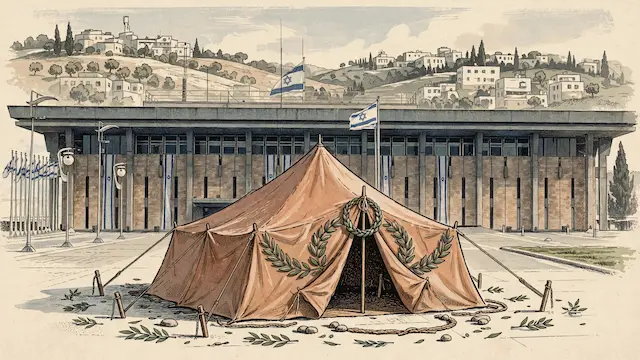
A "unity tent" established opposite the Knesset by Member of Knesset Elisha Mardan aims to foster a broad government and prevent further elections. Prime Minister Benjamin Netanyahu, along with several ministers and Knesset members, visited the tent, which features a "unity" sign handwritten by a fallen soldier. Mardan explained that the sign's inscription by a fallen comrade carries deep personal meaning, representing the soldiers' dying wish for national unity.
Mardan emphasized that the initiative is apolitical, intended to create a shared space for all segments of Israeli society. He expressed uncertainty about its political success but stressed the genuine nature of the call for unity, which he believes resonates with many Israelis. He hopes the tent will become a neutral ground for dialogue among all factions, asserting that the divisions between political camps are artificial.
Knesset Member Eitan called on political leaders, including the Prime Minister and Gadi Eisenkot, to overcome their differences and reach agreements. He noted that the tent has attracted supporters from both coalition and opposition parties, religious and secular individuals, and many young people, all expressing a desire for unity.
Atniel, a student from a preparatory academy, compared the current challenge to historical moments in Israeli politics, urging leaders to emulate figures like Peres and Shamir in bridging divides. He believes such unity is essential for significant change and for ensuring that a substantial portion of the population feels represented and content with their government, viewing the tent as a unique opportunity and a divine sign to pursue unity.
The same event, reported separately by each outlet. Open a few to compare what different newsrooms emphasize — and what they leave out.
Centre 2

Not the same event — other stories that share this one’s people, places, or theme: background, reactions, and follow-ups.



