
AI Voice Deepfakes Fuel Sophisticated Global Fraud Schemes
Translated & summarized from Calcalist by baba
A fraud ring, allegedly including two Israelis, used AI to impersonate executives and steal over $129 million globally, according to U.S. prosecutors. The scheme involved deepfake voices and sometimes video to trick employees into making urgent, confidential fund transfers. While AI can detect fakes, new methods pose a constant challenge, requiring independent verification for sensitive transactions. Experts stress that organizational processes, not just employee vigilance, are crucial to prevent such AI-driven fraud.
The story in 6 lines · by baba
- Two Israelis allegedly involved in a $129 million global fraud using AI voice deepfakes.
- U.S. prosecutors indicted three individuals for using AI to impersonate executives and steal funds.
- The scheme targeted hospitals, a bank, and a British fintech firm, with over $11.5 million stolen from the latter.
- AI models can replicate executive voices and generate new sentences using short voice samples.
- Experts warn that AI detection methods struggle with novel forgery techniques.
- Independent verification channels are essential for sensitive financial transactions.
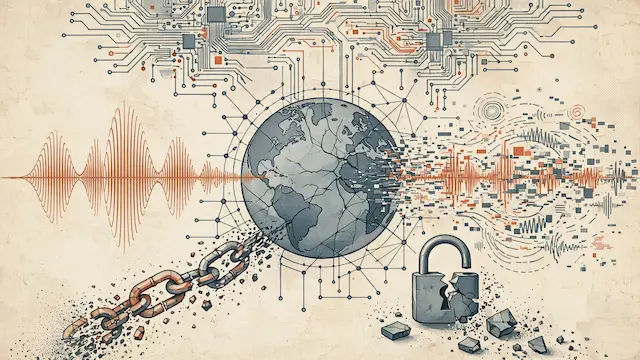
A sophisticated fraud ring, allegedly involving two Israelis, has been exposed in the United States, with prosecutors claiming they used artificial intelligence to mimic the voices of senior executives and steal over $129 million from companies and institutions worldwide. The U.S. Department of Justice announced indictments against three individuals on November 5th, detailing a scheme that targeted hospitals, a bank, and a British fintech firm, from which over $11.5 million was allegedly stolen.
The indictment claims the perpetrators leveraged AI to impersonate executives, often directing finance personnel to transfer funds for purported urgent and confidential deals, sometimes even using deepfake video to enhance the deception. The AI models are trained on extensive voice data, enabling them to replicate pronunciation, rhythm, and intonation, and can generate sentences a person never uttered using just a short voice sample.
This method bypasses the need for actual recordings of executives giving specific instructions, allowing fraudsters to craft their own messages and overlay them with a stolen executive voice. The innovation lies not just in voice forgery but in decoupling a person from the authority their organization attributes to them. The alleged use of secrecy and urgency in the fraudulent transactions limited opportunities for verification, while the impersonated executive's authority lent credibility to the requests.
Dr. Barak Orr, a researcher in AI and deep learning, noted that while AI can be used to detect such fakes, deep learning models face limitations. A model proficient at identifying known forgery types may still miss novel methods. The challenge of generalization, or performing well on unseen data, is not guaranteed, creating a gap where attackers only need one successful exploit, while organizations must maintain constant protection.
Orr emphasized that unusual money transfers, account detail changes, or sensitive authorization requests require independent verification through a pre-established, trusted channel, even when the request appears to come from a CEO. He stated that reliable system engineering assumes components may fail, and planning should account for detection failures. Responsibility must be embedded in work processes, not solely placed on employees tasked with identifying fakes. The true organizational challenge, Orr concluded, is ensuring that a convincing voice, no matter how authoritative it sounds, never becomes a binding instruction on its own.