
Trump Seeks Iran Deal, Potentially at Israel's Expense
Translated & summarized from Israel Hayom by baba
President Donald Trump has declared victory over Iran, claiming its military is destroyed and only economic sanctions are needed. He appears eager for a deal to remove the issue from his agenda, despite concerns from Israel and regional allies about Iran's missile and nuclear programs. The article suggests Trump's perceived weakness after U.S. midterm elections emboldens Iran, and that Israel must prepare for a new, challenging reality if a U.S.-Iran agreement is reached.
The story in 5 lines · by baba
- President Trump claims victory over Iran, stating its military is destroyed and only sanctions are needed.
- The article suggests Trump is eager for a deal with Iran to remove the issue from his agenda.
- Israel and regional allies are concerned about Iran's missile and nuclear capabilities, not its navy or air force.
- Iran believes time is on its side due to President Trump's perceived weakness after U.S. midterm elections.
- Israel and Arab states must prepare for a new reality if a U.S.-Iran agreement is reached.
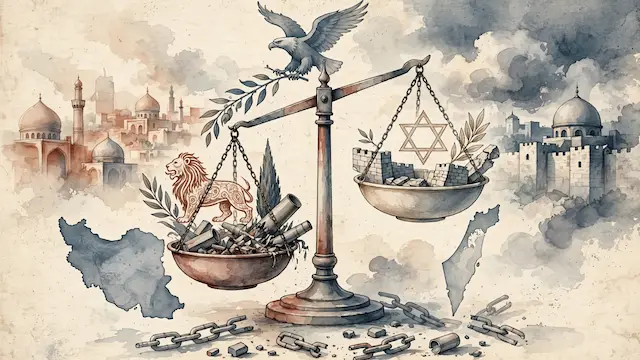
President Donald Trump has declared victory in his campaign against Iran, asserting that Iran's military power has been eliminated and it would take 25 years to rebuild. He stated that further military action is unnecessary, and continued economic sanctions will suffice to achieve a complete victory. Trump's stance echoes his earlier decision to halt military action against Iran, which the article suggests was illogical, claiming the U.S. had already won by eliminating Iran's leader or destroying its navy and air force.
The article disputes Trump's claims about Iran's military capabilities, noting that Iran lacked a significant navy or air force and that the primary concerns for Israel and the region were its missile arsenal and nuclear advancements. Trump has repeatedly threatened renewed military action but has also backtracked, citing Iranian interest in a deal, the U.S. midterm elections, or the conclusion of the war.
Beneath the rhetoric, the article suggests Trump is eager for an agreement with Tehran to remove the Iran issue from the agenda, at least until the end of his term. It posits that the Iran issue is not a matter of life and death for Americans, who are largely unaware of Iran's location or the reasons for the conflict, and are more concerned with fuel prices. The U.S., as a major power, can absorb distant setbacks, unlike its allies who bear the brunt of these consequences.
The delay in reaching a deal is attributed to Tehran's hardened stance, believing time is on their side as Trump is perceived as weakened after the midterm elections. The article suggests an agreement, essentially a surrender by Iran, is a matter of time. If Trump fails, his vice president, J.D. Vance, who opposed the war and has hinted at Israeli responsibility for both the war and the Republican defeat, may pursue it.
The author criticizes the decision to go to war in the spring without considering the possibility of Trump ending it prematurely and abandoning allies. The emerging U.S.-Iran agreement, which could strengthen the Tehran regime, necessitates Israel and moderate Arab states, particularly Gulf nations, to prepare for a new reality where another confrontation with Iran, potentially initiated by Iran itself, may be imminent.
Mentioned



