
Russia Aids Iran's Military Development Via Caspian Sea Route
Translated & summarized from Cursorinfo by baba
Russia is bolstering military and economic ties with Iran, utilizing the Caspian Sea for arms and component shipments and sharing combat experience to improve Iranian drone and missile technology. This collaboration, detailed by Le Monde, enhances Iran's capabilities, posing a security challenge for Israel. Despite Iran's desire for more aid, Russia's own wartime needs and diplomatic considerations limit its support, while Moscow also continues civilian nuclear cooperation at the Bushehr plant.
The story in 5 lines · by baba
- Russia is aiding Iran in improving missiles and drones, using the Caspian Sea for military shipments.
- Moscow shares combat experience from Ukraine to refine Iranian missile and drone tactics.
- The Caspian Sea route is vital for Russia to bypass Black Sea attacks and strengthen Iran ties.
- Iran seeks greater military support from Russia but faces limitations due to Moscow's Ukraine war needs.
- Russia continues civilian nuclear cooperation with Iran at the Bushehr power plant.
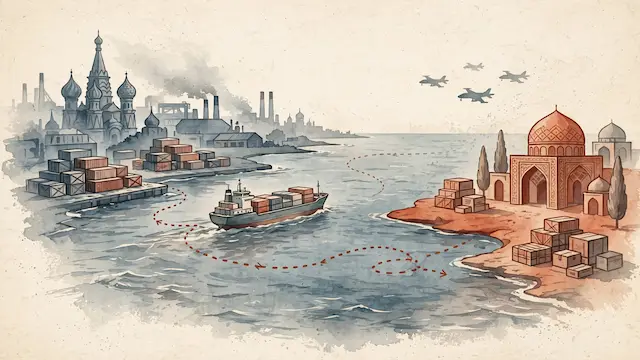
Russia is enhancing its military and economic cooperation with Iran, including assisting in the improvement of missiles and drones, despite Moscow's efforts to maintain relations with Israel. A key element of this deepening partnership is the Caspian Sea, which serves as a crucial route for the transit of food, drones, ammunition, and military components. Russia is also reportedly sharing its combat experience from the Ukraine war to help the Iranian military refine tactics for missile and drone deployment, according to Le Monde.
The Caspian route has become strategically significant for both nations, facilitating trade and cargo movement under international sanctions while offering a relatively secure transport link between Russian and Iranian ports. For Russia, this route is particularly important given Ukrainian attacks on Black Sea infrastructure, allowing Moscow to reduce reliance on vulnerable ports and strengthen logistical ties with Tehran.
Beyond conventional arms trade, experts suggest Moscow is providing Iran with intelligence, satellite imagery, and technological solutions to boost military operations. This includes sharing expertise on the combat use of drones and missiles, and potentially supplying modified "Shahed" drones and man-portable air-defense systems. This collaboration poses an increased threat to Israel, as Iran could leverage Russian assistance to enhance its missile and drone capabilities.
Despite the growing cooperation, Iran is reportedly dissatisfied with the extent of Russian support, seeking more substantial military aid in its confrontations with the U.S. and Israel. However, Russia's own needs for military resources, particularly for the war in Ukraine, and its desire to preserve relationships with Israel and Gulf states limit its capacity to fully meet Tehran's demands.
In parallel, Russia continues its involvement in Iran's nuclear program, with Rosatom planning to increase specialists at the Bushehr nuclear power plant to 700. This civilian energy cooperation underscores Moscow's commitment to strategic economic ties with Tehran, even amidst regional tensions and the threat of strikes from the U.S. and Israel.