
Iran's Military Reconstruction and Nuclear Ambitions Pose Strategic Dilemma for Israel
Translated & summarized from i24NEWS French by baba
Eight months after "Lion's Roar" operation, Iran's nuclear program and military reconstruction remain uncertain despite Israeli and American strikes. Former Mossad official Sima Shine warns that an Israeli strike without U.S. support would be "suicidal." Disagreements persist between Donald Trump, who favors negotiations, and Benjamin Netanyahu, who seeks regime change. Israel faces a dilemma in pressuring Iran without guaranteed U.S. backing.
The story in 5 lines · by baba
- Iran's nuclear program and military reconstruction pose strategic uncertainties eight months after "Lion's Roar" operation.
- Former Mossad official Sima Shine warns an Israeli strike without U.S. support would be "suicidal."
- Donald Trump favors nuclear negotiations while Benjamin Netanyahu seeks regime change in Iran.
- Israel faces a dilemma pressuring Iran without guaranteed American backing.
- Iran's resilience and reconstruction capacity complicate future military operations.
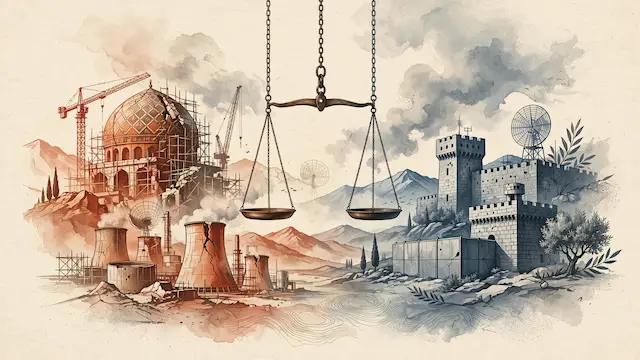
Eight months after the "Lion's Roar" operation concluded, the strategic outcome for Iran appears more complex than initially anticipated by Israeli and American successes. While Iran sustained significant losses, its nuclear program remains opaque, its ballistic missile capabilities are being rebuilt, and the clerical regime persists. A key uncertainty lies in Iran's enriched uranium stockpiles, with their location and the timeline for Tehran to achieve nuclear weapon capability unknown. Specialists cited by Israeli channel Kan suggest that the reconstruction of bombed facilities, possibly in deeper underground sites, could significantly complicate future military operations. The strikes may have paradoxically strengthened Iran's resolve, with former Mossad official Sima Shine positing that the revealed vulnerability might convince some leaders that nuclear weapons are essential for regime survival. Under the new supreme leader, Mojtaba Khamenei, Tehran projects renewed confidence despite a weakened economy and damaged infrastructure, claiming a political victory as popular dissent has not led to the regime's collapse. A significant divergence exists between Washington and Jerusalem regarding the path forward. Donald Trump favors a negotiated nuclear settlement, while Prime Minister Benjamin Netanyahu views regime change as a strategic objective. American reluctance to re-engage in hostilities, influenced by regional pressures and domestic politics, exacerbates this disagreement. Sima Shine considers an Israeli intervention without U.S. backing "suicidal" given Iran's resilience and reconstruction capacity. Israel faces a difficult choice: maintain pressure on Tehran without guaranteed American support, as the strikes have weakened Iran but not resolved the nuclear issue or the regime's stability, and military success has not yet translated into strategic victory.
Mentioned




