
Netanyahu Fears Allies May Bolster Rival's Government Bid
Translated & summarized from Cursorinfo by baba
Israeli Prime Minister Benjamin Netanyahu fears ultra-Orthodox parties may support rival Gadi Eisenkot's government formation efforts, potentially sidelining Likud. Netanyahu's concerns grew after inconclusive talks with MK Yaakov Asher, failing to secure guarantees of continued support. Eisenkot was tasked with forming a government after the October 27 election, but coalition talks are hampered by disagreements, especially over Arab party involvement. A key sticking point for ultra-Orthodox parties is the military conscription of yeshiva students.
The story in 5 lines · by baba
- Prime Minister Netanyahu fears ultra-Orthodox parties may back rival Gadi Eisenkot's government formation.
- Netanyahu's concerns increased after inconclusive talks with MK Yaakov Asher on November 10.
- Gadi Eisenkot was tasked with forming a government after the October 27 election.
- Coalition talks are complicated by disagreements, including the role of Arab parties.
- The conscription of yeshiva students into the IDF remains a key obstacle for ultra-Orthodox parties.
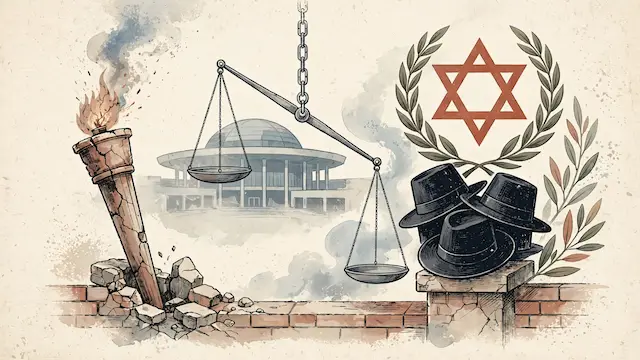
Israeli Prime Minister Benjamin Netanyahu is concerned about a political scenario where his potential allies, specifically ultra-Orthodox parties, might shift their support to Gadi Eisenkot, potentially enabling Eisenkot to form a government without Netanyahu's Likud party. This fear intensified following recent talks between Netanyahu and Knesset Member Yaakov Asher, intended to clarify the ultra-Orthodox parties' intentions. Despite initial optimistic statements from Likud suggesting the threat of rapprochement with Eisenkot had been averted, Netanyahu reportedly remained unconvinced by Asher's responses, which failed to provide firm guarantees of continued political alignment.
Netanyahu's apprehension stems from the post-October 27 election situation, where President Yitzhak Herzog tasked Gadi Eisenkot with forming a new government, backed by 67 Knesset members. However, forming a coalition remains complicated by significant disagreements among potential partners, particularly regarding the inclusion of Arab parties. Avigdor Lieberman, leader of Yisrael Beiteinu, opposes a government reliant on their support. In this context, the ultra-Orthodox factions could become pivotal. Their alignment with Eisenkot could alter the coalition's composition and reduce its dependence on Arab lawmakers, a development particularly threatening to Netanyahu as it could lead to an alternative government formed with parties historically considered his allies.
The crucial issue for ultra-Orthodox parties, and a major obstacle to any coalition with Eisenkot, is the conscription of yeshiva students into the IDF. Maintaining the special status of religious students is paramount for these factions. Disagreements on military service obligations among Eisenkot's potential partners complicate coalition building. The ongoing uncertainty surrounding the ultra-Orthodox parties' final decisions poses a significant political challenge for Netanyahu, leaving him vulnerable to the possibility of his former or current allies aiding his main rival in forming a government.
Mentioned
