
UN Nuclear Watchdog Concerned Over Iran's Concealed Uranium Enrichment Facility
Translated & summarized from Behadrei Haredim by baba
The International Atomic Energy Agency (IAEA) is seriously concerned about Iran's nuclear program, specifically an undeclared uranium enrichment facility in Isfahan. Iran has denied inspectors access to the site since bombings in June 2025, leading to a lack of clarity on its status and contents. The IAEA fears this secrecy, particularly regarding highly enriched uranium, poses a grave proliferation risk and urges immediate resolution.
The story in 6 lines · by baba
- IAEA expresses grave concern over Iran's undeclared uranium enrichment facility in Isfahan.
- Iran has denied UN inspectors access to the Isfahan facility and its design plans.
- The facility is believed to be located within an extensive underground tunnel network.
- IAEA Director General Rafael Grossi estimated significant highly enriched uranium is stored there.
- The IAEA warns of grave proliferation concerns due to lack of information and access.
- The agency urges Iran and the international community to urgently resolve the crisis.
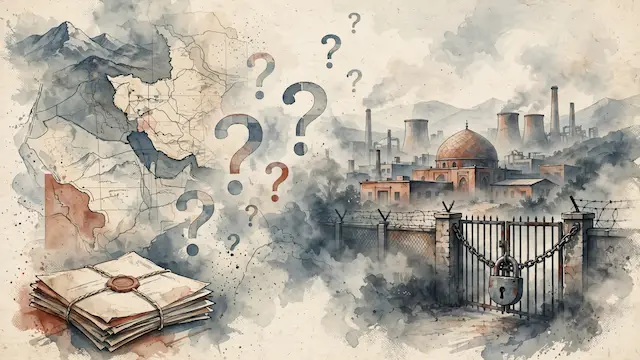
The International Atomic Energy Agency (IAEA) has expressed grave concern regarding Iran's nuclear program, particularly focusing on a uranium enrichment facility in Isfahan. According to a confidential IAEA report obtained by Reuters, Iran, which declared the facility in June 2025, has consistently denied UN inspectors access to the site and its design plans. This Iranian refusal comes in the wake of a 12-day war between Israel and the United States in June of the previous year, during which key enrichment facilities at the heart of Iran's nuclear program were heavily bombed, destroyed, or severely damaged. The IAEA had planned an inspector visit to the Isfahan facility for June 13, 2025, but bombings that began on that exact day made the mission impossible. Since then, Iran has completely blocked inspectors' access to all attacked nuclear facilities.
Diplomats widely believe the Isfahan enrichment facility is located within an extensive underground tunnel network. However, the report explicitly states there is significant ambiguity surrounding the site: "The Agency does not know the precise location of the facility, its status, or whether it currently contains any nuclear material." The IAEA's concern is not purely theoretical. In March, IAEA Director General Rafael Grossi estimated that a substantial amount of Iran's highly enriched uranium is stored deep within the tunnel complex at Isfahan. This sensitive stockpile includes uranium enriched to 60% purity, just short of the 90% military-grade enrichment level required for a nuclear weapon.
The confidential report urges Iran to immediately report the true status of its enrichment facilities and the extent of its enriched uranium stockpiles. It also demands that inspectors be allowed to return to the bombed sites to verify the data. The agency concludes with a stark warning: the lack of information and access to the facilities raises "grave concerns about nuclear proliferation," and calls for the international community and Iran to resolve this crisis with "utmost urgency."
The same event, reported separately by each outlet. Open a few to compare what different newsrooms emphasize — and what they leave out.
Centre 1Haredi 1Arab 1


Not the same event — other stories that share this one’s people, places, or theme: background, reactions, and follow-ups.




