
Trump Orders Vance Away From Iran Talks, Cites Democratic Failures
Translated & summarized from Ynet by baba
U.S. President Donald Trump ordered Vice President J.D. Vance to cease negotiations with Iran and focus on domestic issues, stating "We don't need a deal with Iran." This directive contrasts with Vance's recent efforts to engage Iran, including proposing direct talks. Trump's administration continues to exert pressure on Iran through sanctions and a naval blockade, while Iran has outlined seven conditions for any potential negotiations. The situation remains tense, with differing views on diplomatic engagement and military action.
The story in 6 lines · by baba
- President Trump ordered VP Vance to stop Iran negotiations and focus on domestic issues.
- Trump stated the U.S. "don't need a deal with Iran" and has their money and oil.
- Vance had been actively pursuing direct talks with Iran's Mohsen Rezaei.
- Iran demands seven conditions for negotiations, including sanctions relief and asset release.
- The U.S. has imposed a naval blockade and expanded pressure to Iran's land borders.
- Arab leaders reportedly fear Netanyahu is pressuring Trump to resume hostilities against Iran.
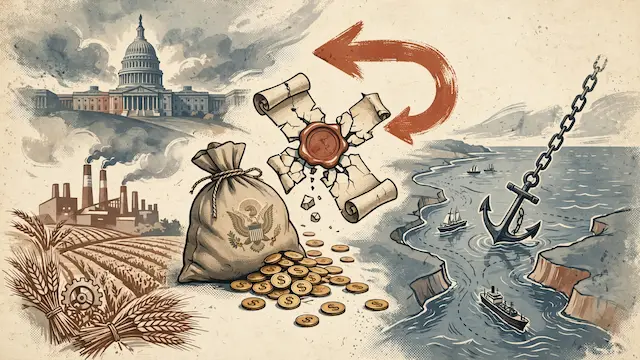
U.S. President Donald Trump announced Thursday that he has instructed Vice President J.D. Vance to disengage from negotiations with Iran and focus instead on alleged corruption and crime within Democrat-led cities and states. "We don't need a deal with Iran. Those days are long gone. We have their money, hundreds of billions of dollars, and we have their oil!" Trump stated on social media, implying that Iran's leverage has diminished.
While Trump did not explicitly state that indirect talks between the U.S. and Iran were halted, his directive signals a shift away from Vance's recent engagement. Vance had previously expressed openness to direct meetings with Iranian officials and had sent a letter to Iran's Supreme National Security Council head, Mohsen Rezaei, proposing renewed talks to end the conflict. Vance had reportedly become more active in engaging with Iran than Trump's envoys Steve Witkoff and Jared Kushner, who are currently focused on Russia-Ukraine negotiations.
Trump's directive appears to contradict his own recent statements, where he had indicated openness to Vance resuming talks with Iran. Rezaei, however, dismissed the possibility of direct negotiations with the U.S. as "imaginary talks" and laid out strict conditions, stating Iran would not export any enriched nuclear material. Vance had publicly suggested that the war with Iran contributed to Republican losses in the midterm elections, a sentiment Trump acknowledged but stated he would still go to war again if necessary.
Other administration officials, including Secretary of State Marco Rubio and Secretary of Defense Pete Hegseth, defended Trump's decision to go to war. Rubio and new White House Chief of Staff Stephen Miller advocate for continued pressure on Iran until it concedes. Trump himself recently indicated a lack of interest in renewed attacks on Iran, stating after a meeting with the Prime Minister of Qatar that "military action is not necessary at this time" and expressing optimism for a solution that ensures Israel's security.
British media reported that Arab leaders fear Prime Minister Netanyahu is pressuring Trump to resume hostilities against Iran. A recent report indicated a tense phone call between Netanyahu and Trump concerning Iran, which was described by sources as "a shouting match from hell," though Netanyahu's office denied this. Trump, in a prior interview, stated he was not interested in renewing attacks on Iran but defended the initial decision to go to war to prevent Iran from obtaining nuclear weapons. Secretary of State Rubio presented a more cautious outlook, noting no breakthrough in negotiations and calling Iran's demands "outrageous, ridiculous, and unrealistic."
The U.S. has imposed a naval blockade on Iran, reportedly preventing billions in oil exports, and recently expanded pressure to land borders with Operation "Iron Gate" to hinder weapon and goods transfers. Iran, in response, demands the U.S. accept seven conditions for broader negotiations, including an end to fighting, lifting of sanctions, release of frozen assets, removal of the naval blockade, war reparations, withdrawal of U.S. forces, and recognition of Iranian sovereignty over the Strait of Hormuz.
Mentioned
The same event, reported separately by each outlet. Open a few to compare what different newsrooms emphasize — and what they leave out.
Centre 1Right 1Haredi 1Arab 1Other 1




Not the same event — other stories that share this one’s people, places, or theme: background, reactions, and follow-ups.

