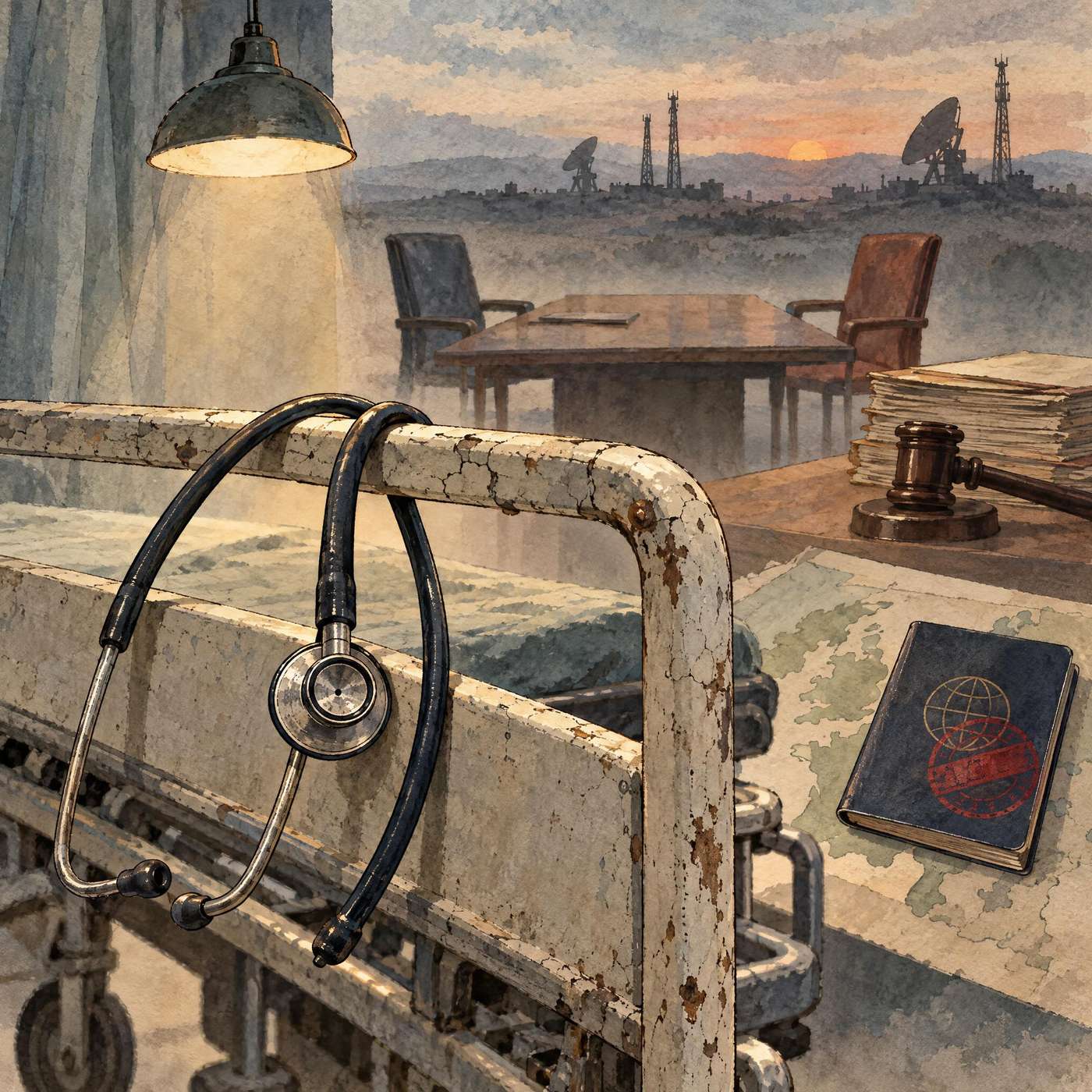
International Law Allows Striking Hospitals Used as Terror Bases
Translated & summarized from Arutz Sheva by baba
Former military prosecutor Morris Hirsch explained that international law permits striking hospitals if they are used as terrorist facilities, following an IDF strike on Gaza's Nasser Hospital targeting Hamas operatives. He stated that hospitals lose their protected status when misused by terrorists as military objectives. Hirsch also noted that while not legally required, public explanation of such actions is advisable for international opinion and detailed the multi-level approval process for strikes on sensitive sites.
The story in 6 lines · by baba
- International law allows striking hospitals used as military objectives by terrorists, according to former prosecutor Morris Hirsch.
- Hospitals lose protected status when misused by terrorists as military targets, Hirsch explained.
- An IDF strike targeted Hamas operatives, including senior official Muhammad Abu Ismail, at Gaza's Nasser Hospital.
- Hirsch suggested explaining such strikes to global public opinion, though not legally required.
- Strikes on sensitive locations like hospitals require a higher approval process than immediate threats.
- Similar strikes on hospitals have occurred in Afghanistan and Iraq involving U.S. and British forces.
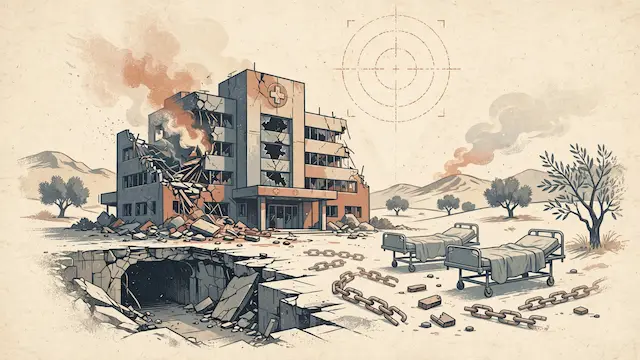
Former military prosecutor Morris Hirsch explained the legal framework that permits striking hospitals when they are used as terrorist facilities, following an overnight strike on Gaza's Nasser Hospital. The strike targeted a senior Hamas official, Muhammad Abu Ismail, and other terrorists present at the hospital.
Hirsch, who previously served as the head of the military prosecution in Judea and Samaria, stated that under international law, any location functioning as a military objective, such as a training site or a gathering place for terrorists, can be attacked. This includes facilities like hospitals if they are co-opted for military purposes.
He emphasized that hospitals are not attacked unless they become legitimate military targets. "When terrorists turn the place into a military target and misuse it, even a hospital loses its protections," Hirsch said. While international law does not require Israel to justify such strikes, Hirsch suggested that a public relations effort to explain the actions, including details about the terrorists and their misuse of the hospital, would be beneficial for global public opinion.
Hirsch also detailed the approval process for such strikes, noting that different types of targets and methods of attack require varying levels of authorization. Immediate threats from terrorists on the ground are handled by soldiers without prior approval, whereas planned strikes, especially on sensitive locations like hospitals, involve a higher chain of command and thorough review of potential collateral damage.
He drew parallels to operations in Afghanistan and Iraq, where U.S. and British forces have attacked hospitals harboring terrorists. Citing Colonel John Spencer, Hirsch noted that Western militaries have established procedures for both rapid and planned strikes on hospitals when necessary, indicating a spectrum of operational responses.
Mentioned
The same event, reported separately by each outlet. Open a few to compare what different newsrooms emphasize — and what they leave out.
Centre 6Right 3Haredi 2Arab 1Other 3
















Not the same event — other stories that share this one’s people, places, or theme: background, reactions, and follow-ups.