
Iran Awaits US Response to Proposal Amid Hormuz Tensions
Translated & summarized from Arab48 by baba
Iran is awaiting a formal U.S. response to its proposal for resuming negotiations, which hinges on seven demands including easing naval blockades. U.S. President Donald Trump's administration maintains a strong stance, emphasizing sanctions and control over the Strait of Hormuz, while Iran warns of severe retaliation for any attacks. Diplomatic efforts continue amidst ongoing tensions, with both sides holding firm to their positions. Regional discussions also took place between Iraqi Kurdistan's president and Iran's president.
The story in 6 lines · by baba
- Iran awaits a U.S. response to its seven demands for resuming negotiations and reopening the Strait of Hormuz.
- U.S. President Donald Trump's administration maintains a strong stance, emphasizing sanctions and control over Hormuz.
- Iran warns of severe retaliation against the U.S. and Israel for any new attacks.
- International mediation is attempting to create conditions for renewed talks through confidence-building measures.
- Iraqi Kurdistan President Nechirvan Barzani met with Iranian President Masoud Pezeshkian in Turkey.
- U.S. officials downplayed the need for further military operations against Iran.
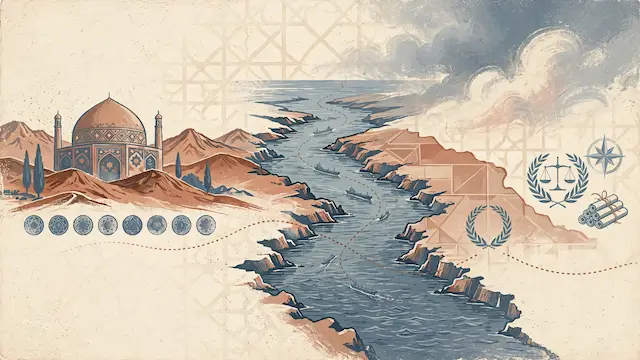
Diplomatic efforts are underway to resume negotiations between the United States and Iran, though both sides remain firm on their positions and conditions. Tensions persist over a naval blockade and the Strait of Hormuz, with no official U.S. response yet to Iran's demands. U.S. Central Command (CENTCOM) stated it is working to keep the Strait of Hormuz open for commercial shipping. The New York Times reported, citing officials, that Washington failed to persuade neighboring countries to close their borders with Iran.
International mediation is attempting to create conditions for renewed talks, proposing confidence-building measures. These include reducing the U.S. military presence in the region and easing the naval blockade on Iranian ports, in exchange for Tehran facilitating passage through the Strait of Hormuz. The Wall Street Journal reported that U.S. President Donald Trump is considering assigning Vice President J.D. Vance to lead negotiations again, with the possibility of a direct meeting with Iranian officials.
Meanwhile, Washington maintains its blockade and sanctions, without officially commenting on Iran's conditions. The White House, as reported by Fox News, asserted that Washington's position is strong, that it controls the Strait of Hormuz, and that the naval blockade remains fully effective, predicting the collapse of the Iranian economy. Trump is said to be in control and will take necessary actions to protect U.S. interests.
Iranian Parliament Speaker Mohammad Bagher Ghalibaf stated that the ball is in the U.S. court, and Tehran awaits an official response to its seven demands for resuming negotiations and reopening the Strait of Hormuz. He stressed that an agreement is possible if Washington fulfills its commitments, but warned that Iran is prepared to respond to any new war initiated by the U.S. or Israel. attacks. He noted that Tehran and Washington are not currently negotiating and that any new U.S. attack would be met with strikes on distant U.S. bases, including those in European countries if used for attacks against Iran.
Rezaei's remarks followed U.S. officials downplaying the need for further military operations against Iran. Analyses suggest Trump's rhetoric has softened since the Republican losses in the November 3 midterm elections. The head of Iran's Basij militia warned that any new mistake by adversaries would be met with a response, emphasizing the unpredictability of Iran's defensive and military capabilities. He claimed Iranian forces targeted the Diego Garcia military base during a 40-day war and forced opponents into an asymmetric conflict, highlighting advancements in Iranian missile accuracy, range, and production capacity.
Regarding negotiations, an official stated that the U.S. President sent an envoy to Russian President Vladimir Putin before the U.S. elections to prepare for talks with Iran, but reiterated that Tehran will not engage in any discussions before its seven demands are met. He argued that the U.S. seeks to lower oil prices through negotiations, asserting that the Strait of Hormuz will determine the balance of power and its reopening requires meeting Iranian conditions. He also mentioned that Washington failed to achieve its stated goals of eliminating the Houthis in Yemen and Hezbollah in Lebanon, and controlling the Bab el-Mandeb Strait, warning that Iranian armed forces are ready to deliver a devastating response to the U.S. and Israel if attacks are repeated.
In regional developments, Nechirvan Barzani, President of the Kurdistan Region of Iraq, met with Iranian President Masoud Pezeshkian in Antalya, Turkey. They discussed bilateral relations between the Kurdistan Region, Iraq, and Iran, exchanged views on regional developments and challenges, and stressed the importance of continued coordination and joint efforts, affirming that dialogue, understanding, and cooperation are the path to lasting peace and stability.
Mentioned
The same event, reported separately by each outlet. Open a few to compare what different newsrooms emphasize — and what they leave out.
Right 1Arab 1


Not the same event — other stories that share this one’s people, places, or theme: background, reactions, and follow-ups.
