Gaza Hospital Hit by Israeli Airstrike, Causing Casualties and Worsening Crisis
Translated & summarized from Al-Shams by baba
An Israeli airstrike on Nasser Medical Complex in Khan Younis killed six people, including a doctor and children, and injured over 60, according to journalist Moaz Al-Amour. The attack caused significant damage to the facility, exacerbating Gaza's already dire humanitarian crisis. Al-Amour stated that the strike is part of an effort to pressure the health system and displace Palestinians. The journalist also highlighted severe shortages of food, fuel, and shelter materials, with restrictions on essential goods hindering relief efforts.
The story in 6 lines · by baba
- An Israeli airstrike on Nasser Medical Complex in Khan Younis killed six people and injured over 60, including patients and children.
- The attack caused extensive damage to the hospital, including its intensive care unit.
- Journalist Moaz Al-Amour linked the strike to Israeli pressure on Gaza's health system and alleged displacement plans.
- Gaza faces a worsening humanitarian crisis with severe shortages of food, fuel, and shelter materials.
- Restrictions on the entry of essential goods, including building materials and seeds, are hindering relief efforts.
- Incoming supplies are reportedly at a minimum level, barely preventing service collapse in hospitals.
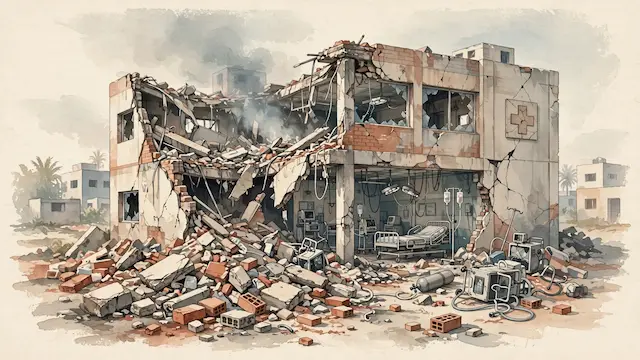
An Israeli airstrike on Nasser Medical Complex in Khan Younis resulted in six fatalities, including an elderly doctor and children, and injured over 60 Palestinians, many of whom were patients, according to Gaza-based journalist Moaz Al-Amour. Speaking on the "First News" program, Al-Amour stated that Israeli warplanes dropped multiple bombs that penetrated three floors, reaching the targeted section and causing extensive damage, including to the intensive care unit. The injured included patients in surgical wards, with women in the female surgery department being among them. Al-Amour emphasized that the attack occurred within a medical facility meant to provide protection and treatment.
Al-Amour linked the strike to what he described as ongoing Israeli efforts to pressure Gaza's health system, noting recent Israeli warnings about hospitals and alleged Israeli-backed plans by armed groups to attack medical facilities. He argued that hospitals and medical centers are the last refuge for Palestinians amidst widespread destruction, serving as essential points of care for residents and displaced people. He believes targeting these facilities exacerbates suffering and aims to pressure and displace Palestinians.
Regarding the humanitarian situation, Al-Amour reported a worsening crisis in Gaza due to shortages of cooking gas, food, and essential supplies, compounded by the effects of rain, cold, and a lack of shelter materials. He accused Israel of creating successive crises by controlling the entry of goods, with some items being held up for days even when stocks are available, leading to shortages and intensified crises. He specifically mentioned recurring gas shortages for home use and restrictions on fruit imports, despite existing stockpiles, further complicating daily life.
Al-Amour relayed information from health ministry-affiliated bodies indicating that incoming supplies barely meet the minimum required to prevent service collapse or fatalities, with fuel for hospital generators lasting only limited periods. He also noted that displaced individuals are still awaiting the entry of caravans for shelter, with none permitted so far. Residents are reportedly willing to build simple shelters using their own funds, but even wood for construction and seeds for potential local crop production are prohibited from entering the Strip. Al-Amour concluded by describing the humanitarian scene in Gaza as extremely harsh and dangerous due to ongoing restrictions on essential needs and the escalating suffering of the displaced and residents.
The same event, reported separately by each outlet. Open a few to compare what different newsrooms emphasize — and what they leave out.
Centre 1Arab 4Other 1






Not the same event — other stories that share this one’s people, places, or theme: background, reactions, and follow-ups.