
Ex-Mossad Chief Proposes Hormuz Strait Blockade Instead of War with Iran
Translated & summarized from Arutz Sheva by baba
Former Mossad chief Dedi Barnea proposed a blockade of the Strait of Hormuz as an alternative to war with Iran, citing the regime's efforts to rebuild its nuclear program. He argued that economic pressure, including sanctions and a Hormuz blockade, would be more effective than military conflict. Barnea also praised U.S. President Donald Trump's approach to Iran, believing it will lead to the regime's collapse.
The story in 5 lines · by baba
- Former Mossad chief Dedi Barnea proposed a blockade of the Strait of Hormuz instead of war with Iran.
- Barnea warned that Iran is actively working to rebuild its nuclear program.
- He believes economic pressure, including sanctions and a Hormuz blockade, is a viable alternative to war.
- Barnea expressed doubt that a lasting nuclear agreement with Iran is possible.
- He praised U.S. President Donald Trump's leadership regarding Iran.
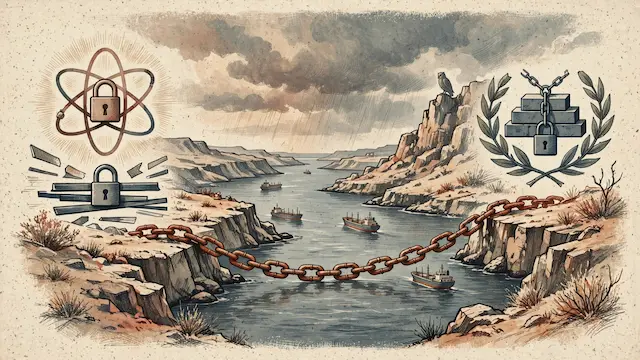
Former Mossad chief Dedi Barnea has proposed a complete blockade of the Strait of Hormuz as an alternative to military conflict with Iran, arguing that economic pressure is a more viable strategy. Speaking at an Israel Hayom conference in New York, Barnea stated that Iran is actively working to rebuild its nuclear program and warned that while war might hasten the regime's collapse, it would severely disrupt the global economy.
Barnea expressed skepticism about the possibility of reaching a lasting agreement with the Iranian regime, which he believes is fundamentally driven by a desire for nuclear weapons and the destruction of Israel. He suggested that any such deal would effectively reward the regime's strategy of terror and grant it perpetual immunity. "The chance of reaching an agreement that this regime will honor, and that will guarantee zero nuclear capabilities, is, in my opinion, low," he said.
Instead, Barnea advocated for intensified economic sanctions coupled with a total blockade of the Strait of Hormuz, asserting that the regime would struggle to survive without oil export revenues. He acknowledged that this approach requires resilience, patience, and determination, but suggested it offers a path to the regime's downfall.
He also praised U.S. President Donald Trump for his steadfast stance against Iran, noting that Trump prioritizes long-term global interests over short-term popularity. Barnea believes Trump's leadership will ultimately lead to the regime's collapse.
Barnea reiterated his warning that Iran's nuclear ambitions persist despite past setbacks, emphasizing that the regime's existence is intrinsically linked to its pursuit of nuclear weapons to achieve its destructive goals. He stated that even now, Iran is attempting to rehabilitate its nuclear program as a means of self-preservation.
Mentioned
The same event, reported separately by each outlet. Open a few to compare what different newsrooms emphasize — and what they leave out.
Centre 1Right 1


Not the same event — other stories that share this one’s people, places, or theme: background, reactions, and follow-ups.




