
Heirs May Lose Tax Breaks on Urban Renewal Projects If Deceased Dies Before Sale Date
Translated & summarized from N12 by baba
Heirs of elderly Israelis in urban renewal projects may lose tax benefits if the deceased dies before the "sale date," according to a new Israel Tax Authority paper. Eligibility for these senior-specific tax breaks is now determined on the transaction's official "sale date." If the senior dies before this date, heirs are assessed based on their own merits, potentially forfeiting the unique tax exemptions. Developers must still fulfill contractual obligations, but the tax implications for heirs could be substantially different, creating uncertainty for families.
The story in 6 lines · by baba
- Heirs may lose tax benefits in urban renewal projects if the deceased dies before the "sale date."
- The Israel Tax Authority now determines tax break eligibility based on the "sale date" of the transaction.
- Senior-specific tax exemptions in urban renewal are no longer automatically transferred to heirs upon death.
- The "sale date" is the official transaction finalization date for tax purposes, not necessarily the contract signing date.
- If the senior dies after the sale date, tax benefits generally continue for the heirs.
- Agreements should explicitly state the fate of benefits upon the senior's death to avoid ambiguity.
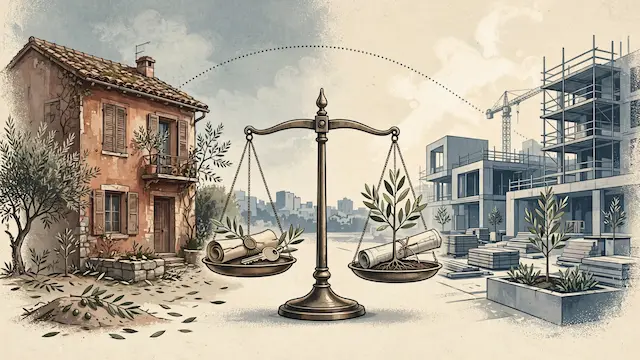
Heirs of elderly Israelis who pass away before the "sale date" in urban renewal projects may forfeit unique tax benefits previously granted to the deceased. A new position paper from the Israel Tax Authority clarifies that eligibility for these tax breaks, designed for seniors in urban renewal initiatives, is determined by the parties involved on the "sale date," which is when the transaction is finalized for tax purposes.
These benefits are crucial for many elderly residents in buildings undergoing renewal, as projects can span many years. The law mandates developers to offer seniors alternative housing options, such as two smaller apartments instead of one, a smaller apartment with a cash payment, or relocation to a nursing home, all accompanied by tax exemptions. Previously, Deputy Attorney General Carmit Yulis opined that these entitlements were contractual rights that passed to heirs, except for the nursing home option. However, her opinion did not address the tax implications for heirs.
The Tax Authority's new paper fills this gap, stating that tax benefits are contingent on the parties' status on the "sale date." If the senior dies before this date, heirs are assessed based on their own eligibility as residents, not as beneficiaries of the senior-specific tax breaks. This means developers must still provide the promised compensation, but the tax treatment could differ significantly.
The "sale date" is a critical, often unknown, date when the transaction is officially recorded for tax purposes, and it may not coincide with the contract signing. This distinction can lead to different tax outcomes for individuals in the same building who signed identical agreements, solely based on their date of death relative to the sale date.
If the senior dies after the sale date, the tax benefits generally continue to apply. However, if death occurs before the sale date, the situation changes. For example, if the deceased was entitled to two smaller apartments, heirs may only receive one tax-exempt apartment if there is only one heir, unless the heir has independent eligibility for two. In cases where the senior had already sold their replacement apartment to the developer and died before the sale date, heirs lose the tax benefit and are subject to standard property sale tax laws.
Legal experts offer differing perspectives. Some argue that tax breaks tied to age and specific needs should cease upon the individual's death, as the original purpose is no longer relevant. Others emphasize that developers rely on these agreements to advance projects, and the original terms should be honored for heirs. The Tax Authority suggests that agreements explicitly detail what happens to these benefits upon the senior's death to avoid ambiguity.
The same event, reported separately by each outlet. Open a few to compare what different newsrooms emphasize — and what they leave out.
Centre 3Other 2





Not the same event — other stories that share this one’s people, places, or theme: background, reactions, and follow-ups.