
Kiryat Shmona Municipality Petitions High Court for Extended War Damage Compensation
Translated & summarized from Kipa by baba
The Kiryat Shmona Municipality has petitioned Israel's High Court of Justice demanding an extension of war damage compensation for businesses beyond the current February 2025 deadline. The city, which saw 350 businesses close and a 47% drop in VAT collection during the war, argues the government's compensation cutoff is arbitrary. Mayor Avichai Stern, who previously criticized the government but later supported Prime Minister Benjamin Netanyahu, is now leading the legal challenge against the state's alleged failure to uphold its commitments.
The story in 5 lines · by baba
- Kiryat Shmona Municipality petitions High Court for extended war damage compensation for businesses.
- The city demands compensation continue until it returns to its pre-war state, citing ongoing economic hardship.
- Businesses faced closures, bankruptcies, and a 47% drop in VAT collection due to the conflict.
- The municipality argues the Tax Authority's February 2025 compensation deadline is arbitrary and unjustified.
- Mayor Avichai Stern leads the legal challenge after previously criticizing and then supporting the government.
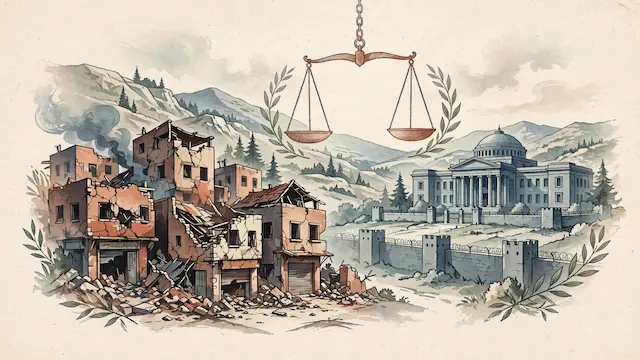
The Kiryat Shmona Municipality has filed a petition with the High Court of Justice (Bagatz) on behalf of the city's residents, merchants, and business owners, suing the Israeli government and the Tax Authority. The central demand is to extend the period of recognition for indirect damage to businesses, which began on October 7, 2023, until the city returns to its pre-evacuation and pre-war state. They also seek to cancel the uniform deadline set for the end of compensation payments. Justice Ruth Ronen has ordered the state to respond to the petition by January. Prior to the appeal to the High Court, the Ministry of Finance rejected all the municipality's requests for dialogue.
The petition challenges the Tax Authority's decision to retroactively cut off compensation eligibility as early as February 2025, arguing it was arbitrary, unreasoned, and disconnected from the lifting of restrictions in the Gaza envelope. The municipality refuted the state's claim that businesses are not entitled to compensation simply because the Home Front Command did not prohibit them from opening, emphasizing that the Tax Authority itself acknowledged the ongoing fighting by extending the claim submission deadlines to August 2026. Alternatively, the municipality demanded compensation for periods of military operations in 2026, specifically "Am K'levia" and "Sha'agat Ha'ari."
Kiryat Shmona was largely empty of residents for about 21 months, and even now, only 55% to 76% of residents have returned. During the war, 350 businesses in the city closed, 54 of which went bankrupt, and VAT collection in the city dropped by 47%. The current routine in Kiryat Shmona is characterized by tense "normalcy", there are no current alarms or rocket fire, but economic activity ceases every evening at 6 PM. Business owners reported that alongside the lack of income, they have begun receiving debt demands from the state for advances they received, which were used for salaries and suppliers and are no longer in their possession. They also clarified that reopening after two years is not a "continuation of activity" but rather establishing a business from scratch.
The municipality's actions have raised questions, given Mayor Avichai Stern's previous sharp criticism of the government for abandoning the north and his subsequent joining of Prime Minister Benjamin Netanyahu's campaign shortly before the elections. However, immediately after the elections, the municipality launched this legal battle, alleging the state is shirking its commitment to businesses that have re-established themselves on the border.
Mentioned
The same event, reported separately by each outlet. Open a few to compare what different newsrooms emphasize — and what they leave out.
Centre 1Right 1

Not the same event — other stories that share this one’s people, places, or theme: background, reactions, and follow-ups.
