
Settler Violence Escalates in West Bank, Targeting Olive Harvesters and Vehicles
Translated & summarized from Arab48 by baba
Settlers and Israeli forces carried out numerous attacks in the West Bank on Tuesday, targeting olive harvesters, vehicles, and agricultural land. Incidents included physical assaults, vandalism, and the use of tear gas by soldiers. A report documented 674 such attacks between October 1 and November 6, with Nablus and Ramallah governorates being the most affected. The violence aims to disrupt the olive harvest and hinder Palestinian access to their land.
The story in 6 lines · by baba
- Settlers and Israeli forces attacked olive harvesters, vehicles, and farmland in the West Bank on Tuesday.
- Israeli soldiers reportedly fired tear gas at farmers during settler attacks.
- A photographer and a foreign activist were injured by stones thrown by settlers near Nablus.
- Settlers vandalized farmland in Sinjil, destroying fences and gates.
- A report documented 674 settler and army attacks on olive trees and farmers from October 1 to November 6.
- Nablus and Ramallah governorates recorded the highest number of incidents.
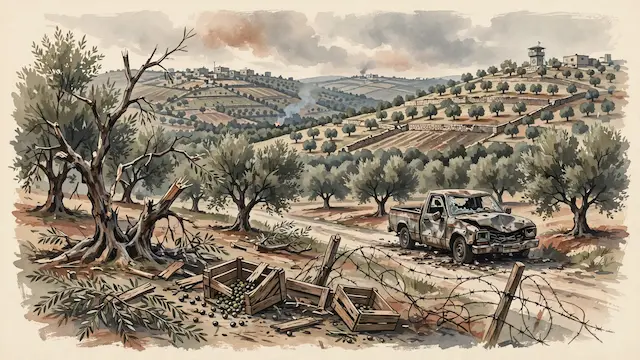
Settler attacks continued in the occupied West Bank on Tuesday, with incidents including assaults on olive harvesters, attacks on vehicles, road blockades, and the destruction of agricultural land. These actions reportedly occurred in the presence of Israeli soldiers who fired tear gas at farmers. In Sinjil, north of Ramallah, settlers vandalized farmland belonging to farmer Marouh Abdel Haq, cutting fences and destroying gates. Local sources reported that settlers, originating from a nearby outpost, have been attacking the area almost daily, hindering residents' access to their land. Settlers also attacked Palestinian vehicles between the villages of Al-Lubban al-Sharqiya and Salfit, blocking a main road for over two hours. Israeli forces reportedly intervened to protect the settlers. In another incident near Nablus, settlers attacked olive harvesters and foreign solidarity activists between the villages of Qusra and Jalud. The Mayor of Qusra, Abdul Azim Wadi, stated that the settlers threw stones, injuring European Agency photographer Alaa Badarneh and a foreign activist. In Deir Abu Mishal, settlers, escorted by Israeli forces, attacked olive pickers and smashed vehicle windows, while soldiers fired tear gas at farmers, preventing them from reaching their land. The Israeli military reportedly continued to fire tear gas even after the settler attack concluded. A report by the Wall and Settlement Resistance Commission documented 674 attacks by settlers and Israeli forces against olive trees and farmers in the West Bank, including East Jerusalem, between October 1 and November 6. Of these, 520 were attributed to settlers and 154 to the Israeli army. The Nablus governorate recorded the highest number of incidents with 230, followed by Ramallah and al-Bireh with 130. Attacks included physical assaults, preventing access to land, firing shots and tear gas, theft of crops and equipment, tree destruction, and arson.
Mentioned