
Domestic Violence Leaves Hundreds of Children Orphaned in Israel
Translated & summarized from Channel 13 by baba
A report by the Michal Sela Forum indicates that 241 children in Israel became orphans between 2020 and November 2026 due to their mothers being murdered in domestic violence incidents. The report highlights a significant increase in such killings, with 2025 being a peak year. It also details a rise in child murders by fathers and criticizes the state's inadequate response and lack of official data collection on the issue. The forum is calling for improved support systems for the affected children.
The story in 5 lines · by baba
- 241 children in Israel became orphans between 2020 and Nov 2026 due to mothers murdered in domestic violence.
- The Michal Sela Forum's report highlights a 112.5% increase in new orphans in 2025 compared to 2024.
- Four children were murdered by fathers in early 2026, double the average, including infants and young children.
- The report criticizes Israel's lack of an official database and calls for better support for orphaned children.
- Over half of murdered mothers were from the Jewish community, and nearly 40% from the Arab community.
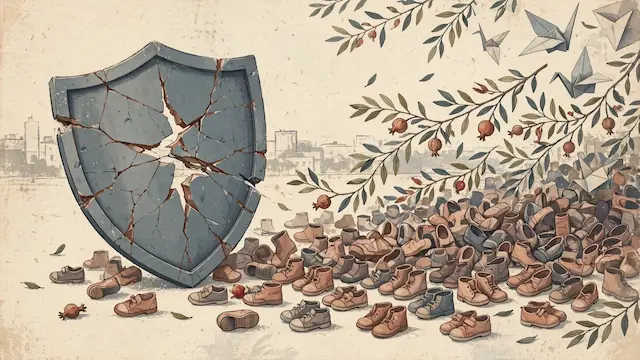
A new report by the Michal Sela Forum reveals that 241 children in Israel became orphans between 2020 and November 8, 2026, due to their mothers being murdered within the family. The report, titled "Father Murdered Mother," was released on Tuesday in observance of the International Month for the Elimination of Violence against Women. It highlights the devastating impact on children left behind, an increase in child murders by parents, and what the forum describes as the state's failure to address these issues.
During the specified period, 88 mothers were killed in domestic violence incidents, leaving 241 children orphaned. The year 2025 saw a peak, with 51 new orphans, a 112.5% increase from 2024, when 24 children were orphaned. By early 2026, an additional 33 children had joined the ranks of orphans.
The report also details alarming statistics on child murders within families. In early 2026 alone, four children were killed by their fathers, double the annual average for the period studied. Victims included a seven-week-old infant and a three-year-old boy who were suffocated, and a six-year-old boy and a nine-year-old girl who were shot. In one harrowing case, an eight-year-old boy survived a stabbing attempt by his stepfather after witnessing the murder of his mother, Meirav Edri.
Furthermore, in the past five weeks, four children, including a two-month-old infant and children aged 5, 6, and 12, were present at scenes where their mothers were fatally stabbed. In two of these instances, the children opened the door to responding police officers.
Analysis of the data shows that 52.3% of the murdered mothers were from the Jewish community and 39.8% from the Arab community, a proportion higher than their relative share of the population. The forum noted that its data was compiled from media reports and information from victims' families, as there is no official government database. Consequently, the actual number of victims may be higher than reported.
Lili Ben Ami, founder of the Michal Sela Forum and sister of Michal Sela, criticized the handling of children affected by these tragedies. She stated that Israel should be proactively publishing such data, rather than relying on donations and piecing together information from media. Ben Ami urged the government to establish a professional system to support these children and their families long-term, including appointing a "victims' rights officer" to coordinate care across welfare, education, police, and judicial systems. She also pointed out that in recent cases, children who witnessed their mothers' murders were separated from their surviving relatives, questioning how long these children will remain "invisible."
The same event, reported separately by each outlet. Open a few to compare what different newsrooms emphasize — and what they leave out.
Centre 3


Not the same event — other stories that share this one’s people, places, or theme: background, reactions, and follow-ups.

