
Palestinian Prisoners' Club Reports Widespread Scabies Among Inmates
Translated & summarized from Arab48 by baba
The Palestinian Prisoners' Club reported that about 80% of Palestinian inmates in Israeli prisons, including children, are suffering from scabies and other severe health issues due to systematic neglect, hunger, and repression. Based on recent visits, the club detailed frequent raids, beatings, and a lack of medical treatment, attributing the widespread scabies to poor hygiene and insufficient clothing. The organization called for international intervention against alleged systematic torture and medical crimes within the prison system, which currently holds over 9,300 Palestinian prisoners.
The story in 6 lines · by baba
- Around 80% of Palestinian prisoners in Israeli jails, including children, are suffering from scabies, according to the Palestinian Prisoners' Club.
- The club reported systematic repression, including raids with dogs and beatings, leading to severe injuries among inmates.
- Prisoners face ongoing hunger and medical neglect, with inadequate treatment for diseases like scabies.
- A shortage of clothing and overcrowding are cited as major factors contributing to the spread of scabies.
- Female prisoners in Damon Prison are experiencing similar conditions, with authorities denying scabies diagnoses.
- The Palestinian Prisoners' Club urged international human rights bodies to intervene against alleged systematic crimes.
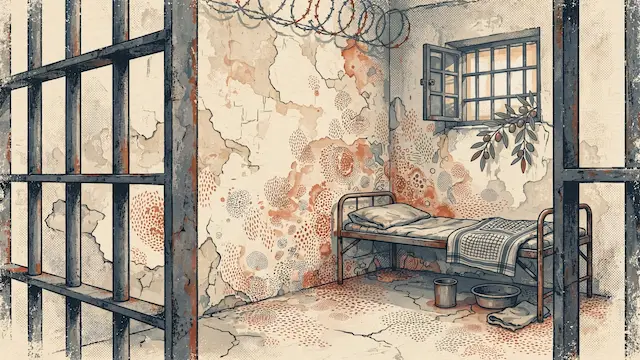
Approximately 80% of Palestinian prisoners, including children, held in Israeli jails are suffering from scabies, according to the Palestinian Prisoners' Club. The organization stated on Sunday that this widespread skin disease, along with ongoing hunger, medical neglect, and harsh living conditions, is exacerbated by frequent repression within prison sections, occurring every two to three days.
The club's report, based on legal teams' visits to dozens of prisoners in October and early November, indicates that Israeli prisons have become a central arena for the ongoing conflict since the Gaza war began on October 28, 2023. The club asserted that the situation in prisons reflects a systematic policy rather than isolated incidents, with key issues including the spread of scabies, deteriorating health conditions, and daily acts of torture and repression.
Prisoners have reported that special units, accompanied by police dogs, conduct raids using various weapons, including new types of firearms that cause burns or immobility, and rubber bullets. These repressive actions, which vary in frequency but occur at least weekly in most prisons and bi-weekly in some sections, often result in severe beatings leading to broken teeth and ribs.
Regarding health, the club highlighted a critical shortage of clothing as a primary cause for the spread of scabies, affecting an estimated 80% of inmates, including children. Prisoners are not receiving adequate treatment for the disease, and the underlying causes of its spread are not being addressed. The quality and quantity of food have also remained unchanged for three years, leading to severe hunger and concerns for the long-term health of inmates.
Testimonies from individuals in Negev Prison, where pseudonyms were used for protection, described injuries from repression, including severed hand tendons and broken teeth. Prisoners also reported being forced to sleep on the floor due to overcrowding and the confiscation of mattresses. Female prisoners in Damon Prison face similar conditions, including hunger, repression, and denial of healthcare, with authorities dismissing their scabies symptoms as allergies despite evidence to the contrary. The club urged international human rights bodies to intervene against what it termed systematic torture, starvation, and medical crimes aimed at the physical and psychological destruction of prisoners.